• FRESHFARM Becomes the Latest Organization to Adopt Pilot Light Food Education Standards

    FRESHFARM Becomes the Latest Organization to Adopt Pilot Light Food Education Standards

    In 2018, after receiving a grant from the USDA Farm to School program, Pilot Light was invited to speak at their annual grantee gathering in Detroit. The 150 attendees heard our Director of Education deliver a presentation centered on our Food Education Standards, the first-ever nationwide recommendations for food education. 

    Since then, Pilot Light has been using the Standards to give our Food Education Fellows detailed guidelines for curriculum development, instruction, and assessment of food education in their classrooms. We are now thrilled to share that one of the other grantees at that Detroit gathering, inspired by what they heard, has also adopted the Standards. 

    FRESHFARM, a nonprofit that promotes sustainable agriculture and improves food access and equity in the Mid-Atlantic Region, is using the Standards as the basis for their Pre-K through 5th grade food education curriculum, FoodPrints. As Jennifer Ramsey, FRESHFARM’s Director of Curriculum and Instruction, told us, “Pilot Light standards are a natural fit with our curriculum because of our shared approach to teaching children about foodways and providing them with positive food experiences. Aligning with the Pilot Light standards strengthened the connections in the FoodPrints curriculum between people, food, and the environment.”

    A paper about the process that led to the creation of Food Education Standards was also published in the American Journal of School Health in this year and has since been cited six times by researchers internationally. In fact, a research team from the United Kingdom recently referenced Pilot Light’s definition of “food education” as THE definition of the term. In addition, the Food Education Standards served as the basis for “Food Thoughts”, an animated series of one-minute videos that aired on Chicago’s PBS affiliate, WTTW, last fall. Each of the seven videos was centered on a different Food Education Standard.

    As the examples above suggest, it is increasingly clear that, through our National Food Education Standards and cohesive model for food education, Pilot Light is facilitating the spread of vitally important food education to schools in Chicago, across our country, and around the world. We’re grateful to FRESHFARM, WTTW, and the other organizations using our Standards for their role in supporting our dissemination efforts.
  • With Pilot Light, Food Education is Part of Everyday Learning

    With Pilot Light, Food Education is Part of Everyday Learning

    Teachers Make Food Education Part of Everyday Learning with Pilot Light’s Fellowship

    Launched in 2019, Pilot Light’s Food Education Fellowship is a year-long professional development and leadership experience for a cohort of PreK-12 teachers from across the country. Through the program, teachers build capacity and skills to make important food education part of everyday learning for their students. 

    Each month, teachers in the Fellowship share stories of what food education looks like in their classrooms. Read on for examples of three of these lessons from fellows Claire O’Connor (Kindergarten), Liz Middendorf (4th Grade), and Kat Henry (6th-8th Grade). In each lesson, the teachers engaged their students in learning through food while teaching about food. These lessons provided students in all three classrooms with sensory opportunities to expand their palettes and learning!  

    Experiential Kindergarten Learning

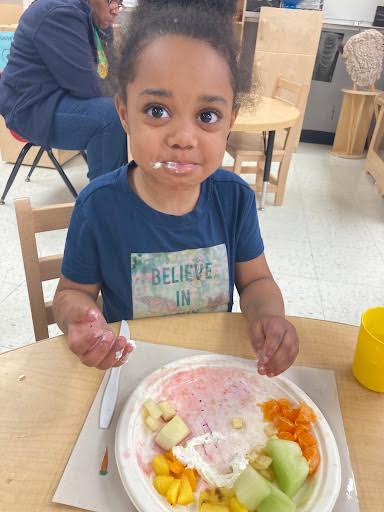
    Pre-K teacher Claire O’Connor brought food education to her young students with an exciting twist on St. Patrick’s Day. For her lesson “Eating the Rainbow,” Claire invited her students to think about fruits that spanned the colors of the rainbow. First, they brainstormed in groups, then shared their answers. Next, Claire surprised students with a delicious assortment of fruits that represented the colors of the rainbow. As they ate honeydew melon, mandarin oranges, pineapple, mango, strawberries, blueberries, raspberries, and kiwi, many commented that it was the first time they had tried some of the fruits. This innovative lesson expanded the students’ palette and increased their understanding of all the nutrients fruits have.

    Integrating Food Education into a 4th Grade Classroom

    In her 4th-grade classroom, Liz Middendorf teaches multiple subjects and, through the Food Education Fellowship, is integrating food education into her core curriculum. 

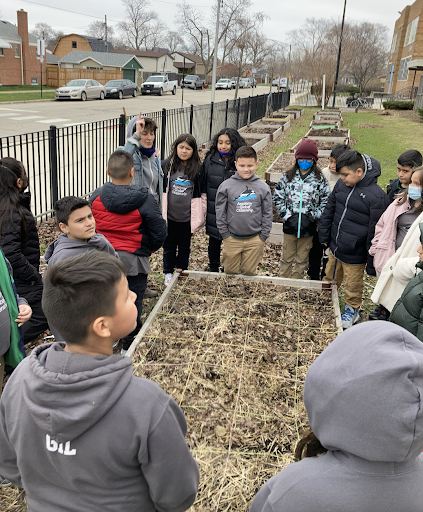
    Let’s take a look at a recent math lesson. As part of the unit covering multiplication and fractions, Liz asked students to prepare a garden bed for planting by dividing it into sections. 

    To start, the students planned which vegetables to plant in each section. This exercise helped them better understand their math lesson and the work that goes into producing our food. Next, the class used these skills to plant cold-weather foods during March that will be ready to eat before their school year ends. 

    Liz also uses Pilot Light to support social-emotional learning and reading. For example, during a lesson on immigration, students read several books about how cultural food can promote a sense of belonging, including A Different Pond, Tani’s New Home, and Apple Pie 4th of July. Then, they discussed how food could make someone feel at home or out of place. In addition to language arts skills, this type of lesson builds empathy and understanding between classmates.

    Building literacy and life skills through food education

    For her 6th-8th grade Special Ed Resource Reading classes, Kat Henry uses Pilot Light to create experiential lessons to build essential life skills for her students. 

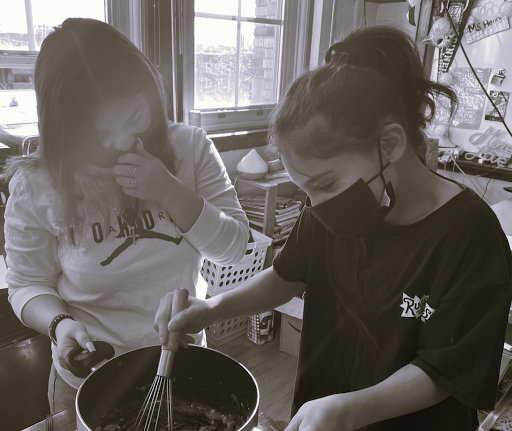
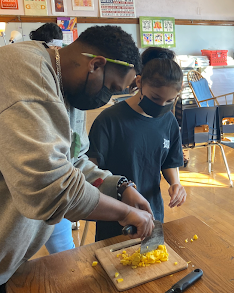
    Kat taught students the main components of soup: fat, liquid, aromatics, and herbs/spices. Then, the class collaborated to decide who would lead each task to prepare the soup. During these hands-on lessons, Kat emphasized the importance of following directions and working as a team.


    The class has used their skills to make a few soups, including curried cauliflower coconut and broccoli cheddar. Although it was the first time many had tried these soups, her students loved these soups. They were skeptical about trying something new, but they loved them. Using Pilot Light to teach through food creates a significant impact in the classroom by building skills like these.

    Learn more about our Food Education Fellowship. We are accepting applications from PreK-12 teachers through May 23, 2022. 

  • Pilot Light’s Food Education Fellowship Earns Rave Reviews from Teachers

    Pilot Light’s Food Education Fellowship Earns Rave Reviews from Teachers

    Launched in 2019, Pilot Light’s Food Education Fellowship is a year-long professional development and leadership experience for a cohort of PreK-12 teachers from across the country. The program is designed to build teacher capacity and skill to make important food education part of everyday learning for their students. Guided by Pilot Light’s Food Education Standards, Fellows integrate food education into their classrooms each week as a tool for experiential learning in subjects like math and reading. At the same time, students learn about food and the impacts of their choices on their bodies, communities and our planet.

    In the four years since the Food Education Fellowship launched, over 50 teacher fellows have shared enthusiastic feedback on the quality of the professional development and the support they receive from Pilot Light. Further, through the Fellowship, they find a community of other passionate teachers who are also committed to creating positive impact in their classrooms through food education. 

    High Quality Professional Development, Coaching & Support

    “My experience has been wonderful. I love the different views, presenters, lessons, freedom to explore, diversity of participants, and the openness to demonstrate objectives based on various learning styles.”

    Fellowship teachers rave about Pilot Light’s professional development! The monthly sessions are collaborative spaces where teachers learn from guest speakers and from one another.

    Guest speakers are experts who enhance teachers’ understanding of our 7 Food Education Standards. In 2021-22, speakers have included:

    • Chef Sebastian White of the Evolved Network, who discussed how food and the environment are interconnected (Food Ed Standard 3). 
    • Rozina Kanchwala of Eco Logic Programs, who spoke about how food choices affect one’s life, community, and the world (Food Ed Standard 7). 
    • Ed McDonald, MD, Assistant Professor of Medicine and Associate Director, Adult Clinical Nutrition at University of Chicago spoke about how food impacts health (Food Ed Standard 5).

    Teachers engage in conversations with these experts, which creates the opportunity for a deeper understanding of the topic and practical applications in their classrooms.

    The Support from Pilot Light

    “Pilot Light’s staff are some of the best people I’ve ever met. Their approach and empathy for teachers are unmatched.” 

    “I appreciate the empathy you express and show to Fellows. It’s tangible in every communication sent out, and great to have such healthy support.”

    Since 2019, teachers in the Food Education Fellowship program have consistently shared positive comments about the support they receive from Pilot Light. Teachers appreciate that our programming team is flexible, responsive, and takes a common-sense approach to integrating food education into everyday learning. 

    Teachers have described Pilot Light’s level of support as “unmatched.” First, the Pilot Light team takes the time to understand each teacher’s classroom environment. Then, we establish an open line of communication to learn what teachers need to weave food education into their curriculum effectively. This creates an environment where teachers feel comfortable working with us to empower their students through food education. 


    A Community of Teachers Committed to Food Education

    “I think one of the greatest strengths of the Pilot Light Fellowship is the wide variety of educators in PreK-12, urban and rural, and in many different places. I would for sure recommend teachers in my school apply next year and would highlight that the program can benefit all students, regardless of age or zip code.”

    Our professional development provides the opportunity for teachers nationwide, across grade levels and content areas, to collaborate. As they share their experiences, teachers discover new ways to weave food education into their core subjects. Fellowship teachers are creative and generous with one another, routinely sharing lessons and materials. 

    Learn more about our Food Education Fellowship. We are accepting applications for the 2022-23 Cohort through May 23, 2022. 


  • Join the Pilot Light Associate Board!

    Join the Pilot Light Associate Board!


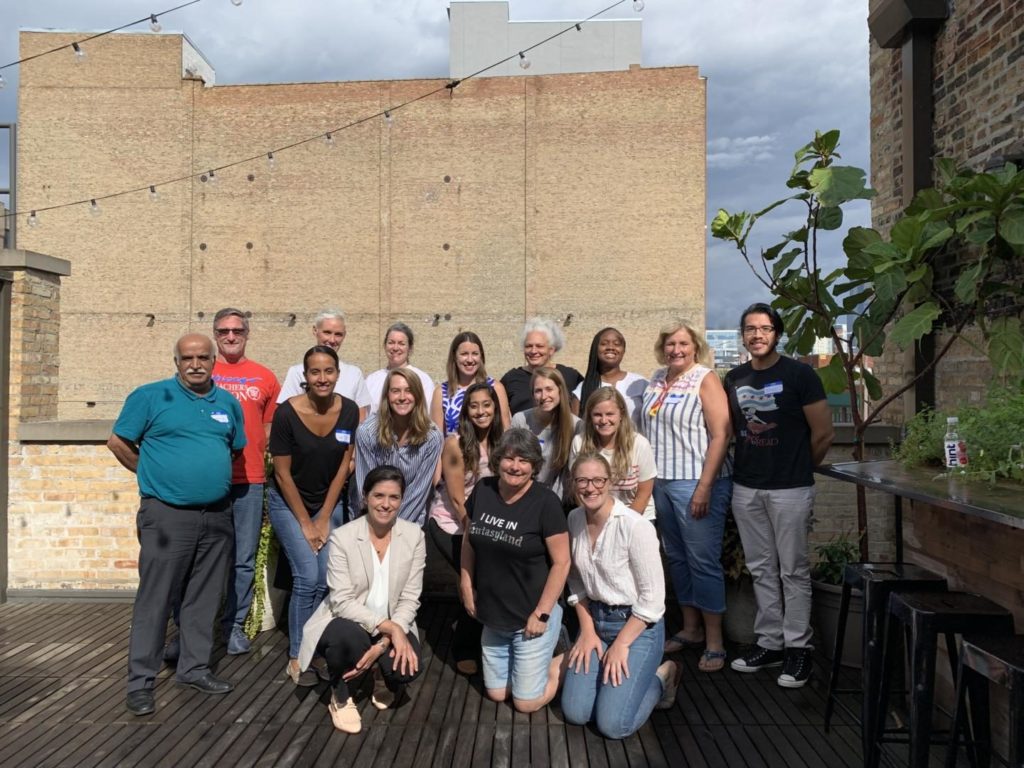
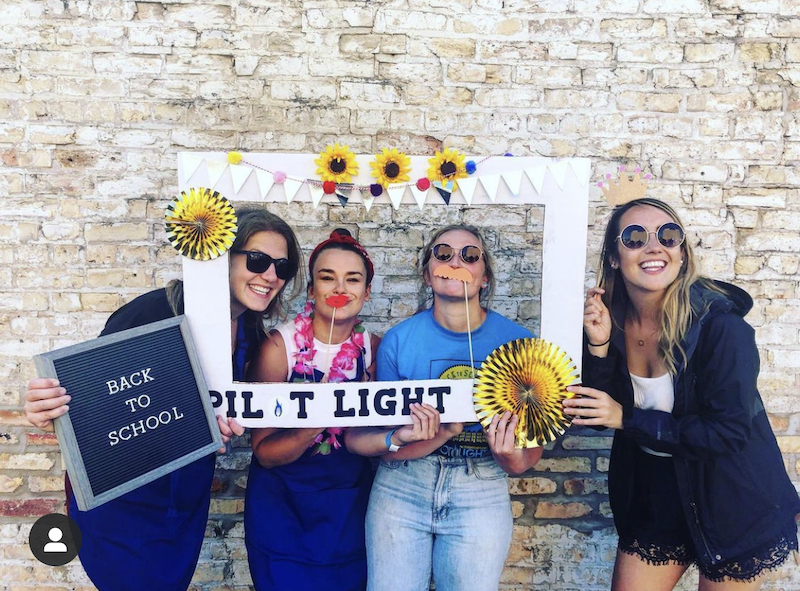
    At Pilot Light, we believe food education is vital to student development, and since 2010, our teacher-driven approach has supported Pre-K-12 students with food education that is part of everyday learning and fosters informed food choices. Pilot Light’s Associate Board is excited to announce that they are actively recruiting new members! Learn more about why you should apply:


    What does the Associate Board do?

    The Associate Board promotes and fundraises for Pilot Light’s food education programming in schools in Chicago and nationwide. 

    Past events include:


    What are the requirements to join the Associate Board?

    It’s simple – get excited to spread the word about Pilot Light and food education in your community! We also have a monthly team meeting (1 hour via Zoom) where we catch up on Pilot Light’s current initiatives, brainstorm fundraising events, and more.


    What are the perks of joining the Associate Board? 

    Work with a fun, motivated group of professionals who are passionate about promoting Pilot Light’s work. It’s also a unique way to flex your creativity and leadership skills through roles in finance, event planning, marketing, and more!


    Why should I join the Associate Board?

    Hear from some current members about why they love being a part of the Pilot Light Associate Board:

    “I love the Associate Board because it combines my passion for food with my desire to contribute to a non-profit who is giving back right into Chicago’s communities. Supporting its work has been so rewarding, with the cherry on top being planning fun events with an amazing group of people.”

    -Natalie


    “I joined Pilot Light’s Associate Board when I first moved to Chicago and it has been a great way to get to know the city, communities, and great people dedicated to supporting the city through food education! The Associate Board also provided new opportunities for me, like working with the other members to help plan and execute events in person and virtually.”

    -Carolyn


    “I love being a member of the Associate Board for Pilot Light because it exposes you to so many amazing restaurants throughout the city! Chicago is such a food town and getting exposure to different chefs and types of food has been an added bonus to joining the board that I didn’t expect!”

    -Mary


    How can I apply to the Associate Board?

    You can find our online application here. We would love to hear more about you! Once your application is submitted, we will be in touch to schedule a time to chat & learn more about you.


    Learn more about membership requirements in our one-pager.


  • Chef Demo: Food, Culture and Mental Health

    Chef Demo: Food, Culture and Mental Health

    Creating Impact through a Chef Demo

    Chef Demo: Food, Culture, Mental Health

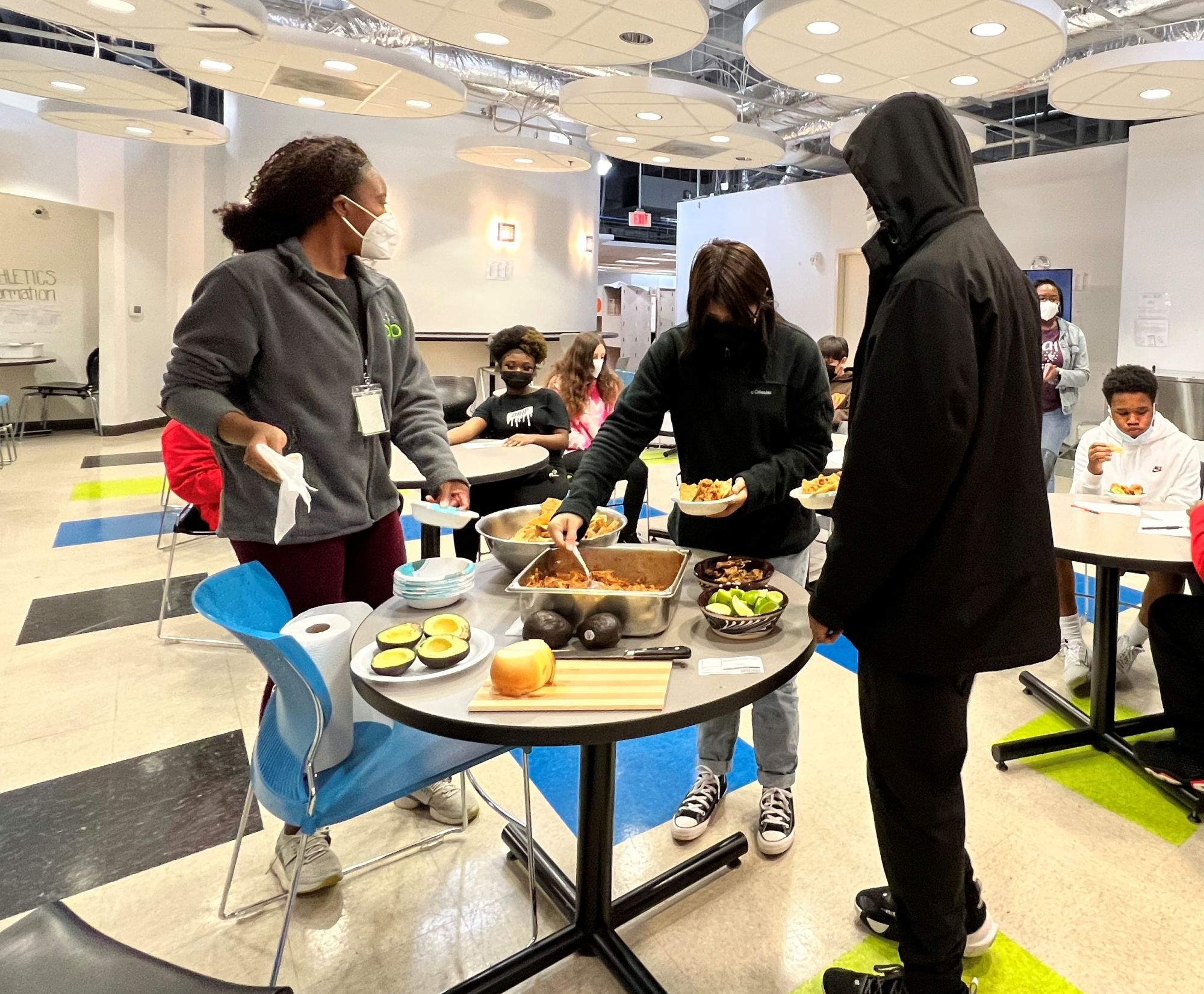
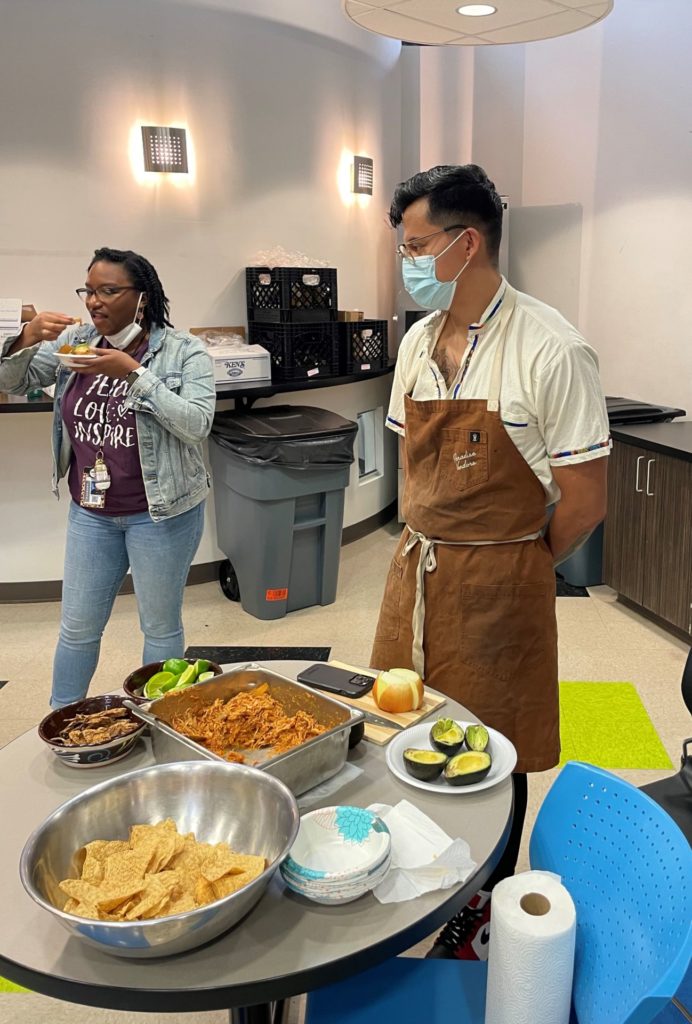
    Charlotte, NC teacher (and Pilot Light Food Education Fellow) Ashley Sandoval hosted a magical event for her 9th grade Holistic Fitness students by using Pilot Light’s framework to create a food-based lesson. Her students are learning about food cultures that reflect their own identities and making connections with chefs who are representative of those cultures. To create this lesson, Ashley collaborated with Chef Damian Sandoval of Xiao Bao Biscuit.


    Building Cultural Knowledge through Chicken Tinga


    Damian discussed his journey from Chicago to Charlotte and led a cooking demonstration centered around Chicken Tinga, a Mexican dish that he grew up making and eating with his family. Chicken Tinga is shredded chicken stewed with onion, tomato, and chilies en adobo. It is often served in a taco, with rice or beans, or even on chips. Students enjoyed the opportunity to build on their knowledge of Mexico’s rich and diverse food history by tasting Chef Damian’s Chicken Tinga.  


    FES 5: Food Impacts Health

    Pilot Light lessons are grounded in our seven Food Education Standards. This one centered on Food Education Standard (FES) 5: Food impacts health. Mental health is an important piece of Ashley’s Holistic Fitness class and Chef Damian discussed the effect food has on his own mental health and mood. 

    Ashley’s students loved this experience. By using food to teach, Ashley created a space for meaningful conversations about both culture and mental health. At Pilot Light, we are thrilled to see all the creative ways that teachers use food to make an impact in everyday learning.


  • Partnership Spotlight: Baltimore City Public Schools Farm to School Program

    Partnership Spotlight: Baltimore City Public Schools Farm to School Program

    “I would love to have my students realize:

    …how food will affect their overall health – bodies/minds/teeth/energy
    …how to make better choices when surrounded by unhealthy options.
    …where their food comes from.
    …how we use food to bring people/communities together and learn from one another.

    I feel Pilot Light would be great to use in multiple subjects, making connections in literacy, science, social studies, and even math!”

    Laura Alminde, 2021-22 Food Education Fellow & Kindergarten Teacher


    Pilot Light and Community Partnerships

    Laura Alminde teaches kindergarten for Baltimore City Schools and selected The Baltimore City Public Schools Farm to School Program as her community partner through Pilot Light’s Food Education Fellowship. These community partnerships are an important part of the Fellowship and complement a teacher’s Pilot Light food education lessons, creating a deeper impact for students.

    Baltimore City Public Schools Farm to School Program

    The district’s Farm to School (F2S) team, part of the Food & Nutrition Services department, offers an array of in-person and virtual programs which promote experiential education that connects students to nature and food systems. *Their services focus on three core areas:

    1. Food education for lifelong healthy habits.
    2. Nature-based exploration for wholeness and academic enrichment.
    3. Food system engagement for active citizenship, leadership development, and career skills. 

    The district also owns the 33-acre Great Kids Farm, a hub for its F2S programs.

    Hands-on Learning Experiences for The Little Red Hen

    Ms. Alminde recently used Pilot Light’s approach to create lessons for her unit on farms. For two lessons, she worked with Laura Genello, a F2S Specialist with her community partner, to create hands-on learning experiences to support the kindergarten lessons.

    As part of the curriculum, students read The Little Red Hen, a classic story about a resourceful little bird who was determined to make bread from scratch. You may remember that the Little Red Hen began by planting her own wheat and at the end of the story, she pulls a fragrant loaf of homemade bread from her oven. Many of the students didn’t know that bread was something you could make at home.  

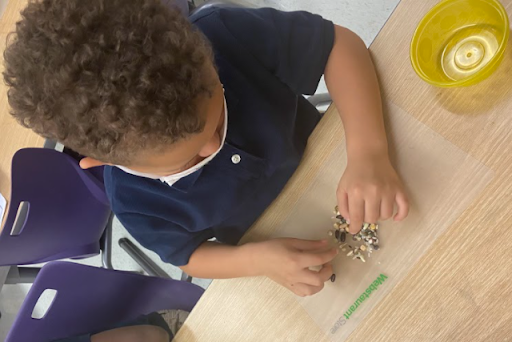
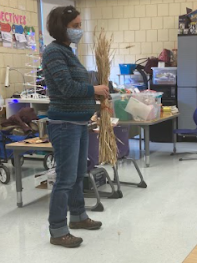
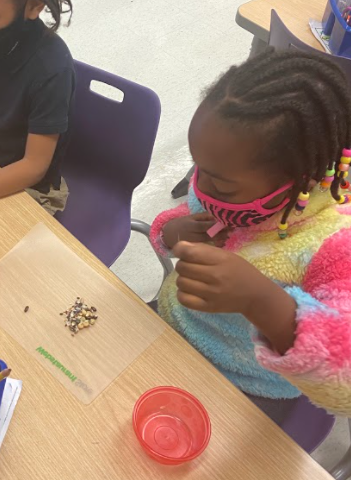
    Ms. Genello (whom the students know as Farmer Laura) brought stalks of wheat to the class, then talked about wheat and other types of seeds that we eat. Students were given a variety of seeds, such as beans, dried peas and rice, to touch and sort. They also sequenced the steps the Little Red Hen completed so that she could enjoy freshly baked bread. 

    Sensory Lesson on Seeds

    For a second lesson on seeds, Ms. Genello created an incredible experience on the five senses that students absolutely loved. Everyone was given a cob of corn and they picked off the kernels (which are seeds). Ms. Genello then cooked the popcorn right in front of them. The students were in awe as they heard the corn popping and loved eating something that they had picked themselves. 

    Ms. Alminde commented that these were phenomenal experiences, and she can’t wait to have the Great Kids Farm F2S team back to her classroom.

    This is just one of the community partnerships coming to life this year through Pilot Light’s Food Education Fellowship. Local community partners, like Great Kids Farm, help create relevant, hands-on lessons for Pilot Light classrooms. 

    *Farm to School | Baltimore City Public Schools, https://www.baltimorecityschools.org/farm-school, Accessed on February 18, 2022. 

  • Partnership Spotlight: Green City Market and Star Farm Chicago

    Partnership Spotlight: Green City Market and Star Farm Chicago

    All of the teachers in our 2021-22 Fellowship are working with community partners to create an impact through food education. Ms. Kaley Relaz (ELA & Math for Diverse Learners, Chicago) recently collaborated with Star Farm Chicago and Green City Market to develop a lesson on life skills.

    Ms. Relaz’s classes were all scheduled to observe as Chef Rocio from Star Farm Chicago demonstrated how to make a delicious, colorful sweet potato hash right in the classroom using one of Pilot Light’s mobile kitchen carts. Would you like to know our favorite part of this story? One class was in quarantine and missed the demonstration. When they returned to school, Ms. Relaz’s 6th graders served as chefs-for-a-day and showed them how to make the hash. Pilot Light lessons make an impact!

    Thanks to Green City Market and Star Farm Chicago, all students were all given farm fresh ingredients so they could make the dish with their families.

    For more examples of lessons, follow us on social media and subscribe to our newsletter.

  • Founding Chef Paul Kahan on WGN

    Founding Chef Paul Kahan on WGN

    On Wednesday, January 26th, WGN’s Midday segment featured one of our founding chefs, Paul Kahan. Watch as Paul shows the host how to shuck oysters while talking to him about Pilot Light, food education and the Charity Shuck Off, which will be held at The Publican on February 2nd (2/2/22!).

  • Supporter Spotlight: Frank Mahoney

    Supporter Spotlight: Frank Mahoney

    We’re continuing to highlight the incredible folx who support Pilot Light with their time and energy on our all our boards: Board of Directors, Advisory, Development, and Young Professional. We are so grateful for their dedication and passion for food education day in and day out!

    Featured today on our Feeding Minds Blog is a member of Pilot Light’s Board of Directors Frank Mahoney. Frank has played a key role in our organizational growth.

    (more…)
  • From our table to yours: Hanukkah Latkes

    From our table to yours: Hanukkah Latkes

    In the spirit of Hanukkah, we’re sharing a delicious recipe for latkes from one of our Directors, Leah Gordon. Leah told us that she usually makes them “by feel” but agreed to put it to paper for Pilot Light! Happy Hanukkah to everyone celebrating! 

    —

    Leah Gordon’s Hanukkah Latkes

    Ingredients:
    – 4 medium Russet Potatoes
    – 1 small, or ½ medium Yellow Onion
    – 2 Eggs
    – 1/2 cup All Purpose Flour
    – 1/2 tsp Salt
    – 1/4 tsp Pepper
    – Canola Oil

    To make the latkes:
    – Using a deep-frying pan, pour canola oil in to cover the bottom and a ¼ inch up the sides of the pan. Bring the pan up to a medium heat.
    – Place a colander in the sink, and after peeling the potatoes grate them into the colander using the large cut on a box grater. Remove the skin from the onion and grate it into the colander as well. Using a spatula, press it against the potato and onion mixture to help remove excess moisture while moving them around, and then use the spatula to scrape the mixture out of the colander into a large mixing bowl. Crack the eggs into the mixture and combine with a fork. Add the flour, salt and pepper, again combining the mixture with a fork. If the mixture is wet and not binding together, add a Tablespoon more of flour at a time until getting the consistency you want.
    – Drop a small pinch of the latke mixture into the frying pan to check the temperature of the oil. If the oil sizzles around the mixture, then you’re ready. If not, bring the heat up a little and
    check the temperature using a little pinch of the latke mixture again.
    – Using a ½ cup measure, scoop the latke mixture from the bowl and turn it out gently into the frying pan. Use the back of the measuring cup to press down the latke mixture a bit. Repeat 2-3 times, but don’t overcrowd the pan. After 2-3 minutes flip the latkes using a fork and a spatula (tongs will break apart the batter) to help not splatter yourself or the cooking area with hot oil. You’re looking for a deep golden-brown color when you flip the latke, so adjust the heat accordingly as you cook. Once both sides are the desired color, remove the latkes and place on a cooling rack with paper towels underneath to catch the excess oil. Add more oil to the pan (make sure to bring it back up to temperature) in between batches if necessary.
    – Serve with the traditional accompaniments of applesauce and sour cream or have fun and try different toppings and garnishes.