Introducing FEEDING FUTURES: a new opportunity for teachers in Chicago, Decatur, and East St. Louis interested in Food Education!
The Feeding Futures Fellowship application is officially open! This new initiative is a two-year, paid professional development program for 3rd through 5th grade teachers in Chicago, Decatur, and East St. Louis, IL.
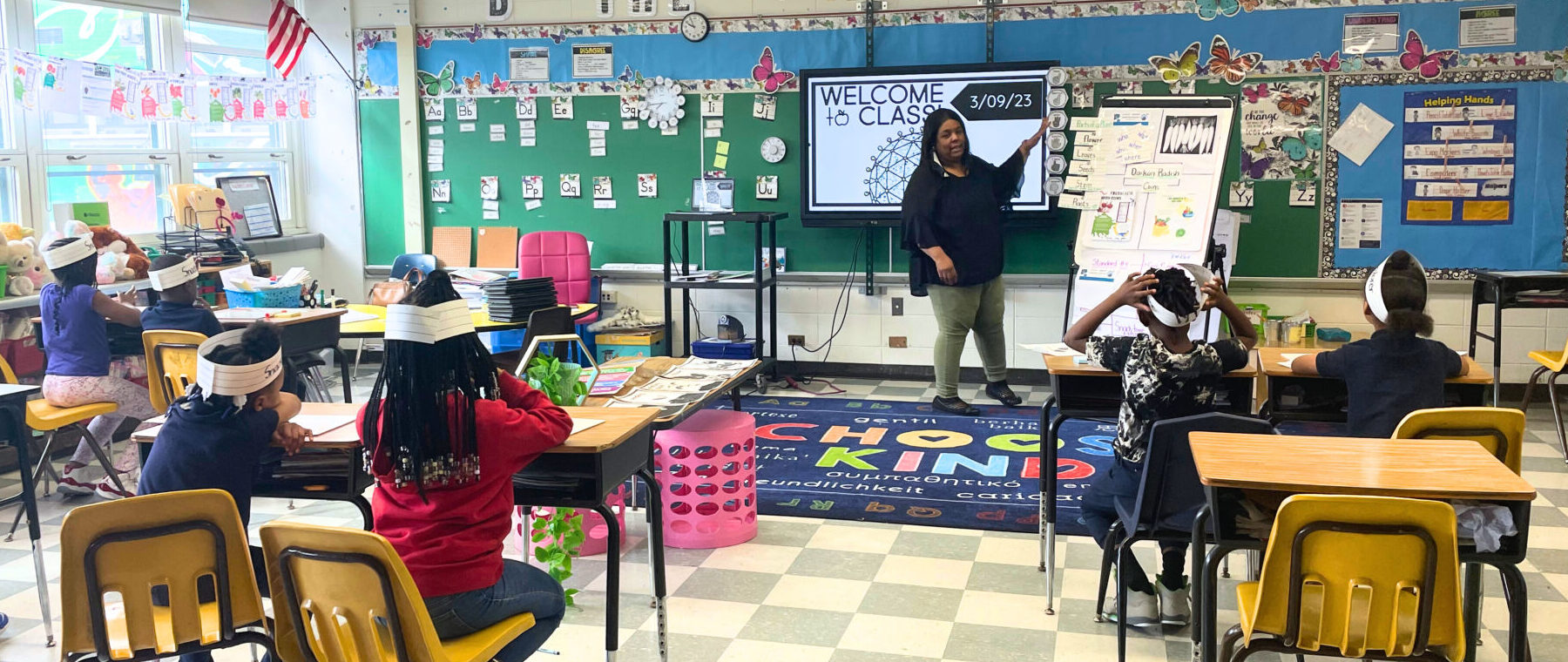
Pilot Light is currently seeking Chicago teachers in the Austin, Englewood, and North Lawndale neighborhoods to join the first Feeding Futures cohort. Feeding Futures was created for teachers interested in bringing Food and Agriculture Education to their students on a weekly basis for two years to expose young people to how food systems impact their lives, particularly from a culturally relevant perspective. Additionally, Feeding Futures plans to develop student interest in becoming food system changemakers with an interest in future careers in agriculture, farming, and/or agri-business.In addition to integrated Food Education lessons, Fellows will partner with an individual or organization in their local food space to support student-led advocacy work within their classrooms.
As a Feeding Futures Fellow, teachers will:
Deliver weekly lessons integrating food as context into core subjects.
Engage in over 30 hours of monthly professional development with IL continuing education credits issued.
Earn a $2,000 stipend per year for participation, implementation, and evaluation + receive $400 additional for classroom materials per year, as well as additional funding to support regular work with a partner in their local food space.
Receive 1:1 coaching and support from Pilot Light staff an industry experts.
Engage in designated collaboration time with the Feeding Futures grade-level specific cohort consisting of teachers in Chicago, East St. Louis, and Decatur, IL.
In Year 2, participate in cohort learning opportunities around developing relevant curricular resources to support growing your local food system.
School will receive a $1,500 stipend per teacher to provide sub coverage for collaborative learning opportunities, materials, supply and maintenance costs, and any additional needs.
Feeding Futures is an initiative of the Food-Integrated Education Alliance (FIEA), of which Pilot Light is a member and will be implemented in Chicago, Decatur, and East St. Louis, Illinois. Teachers elected for Feeding Futures will have a unique opportunity to be part of an intra-district network of educators supported by Pilot Light and the Alliance (no travel required) and be connected with other FIEA members including the Chicago High School for Agriculture Science, Donald Danforth Plant Science Center, Decatur Public Schools Foundation, Illinois State Board of Education, Jackie Joyner Kersee Food, Agriculture and Nutrition Innovation Center in East St. Louis, Office of the Lt. Governor of Illinois, and the University of Illinois Urbana-Champaign (UIUC), who will support the Fellowship with assessment and evaluation.
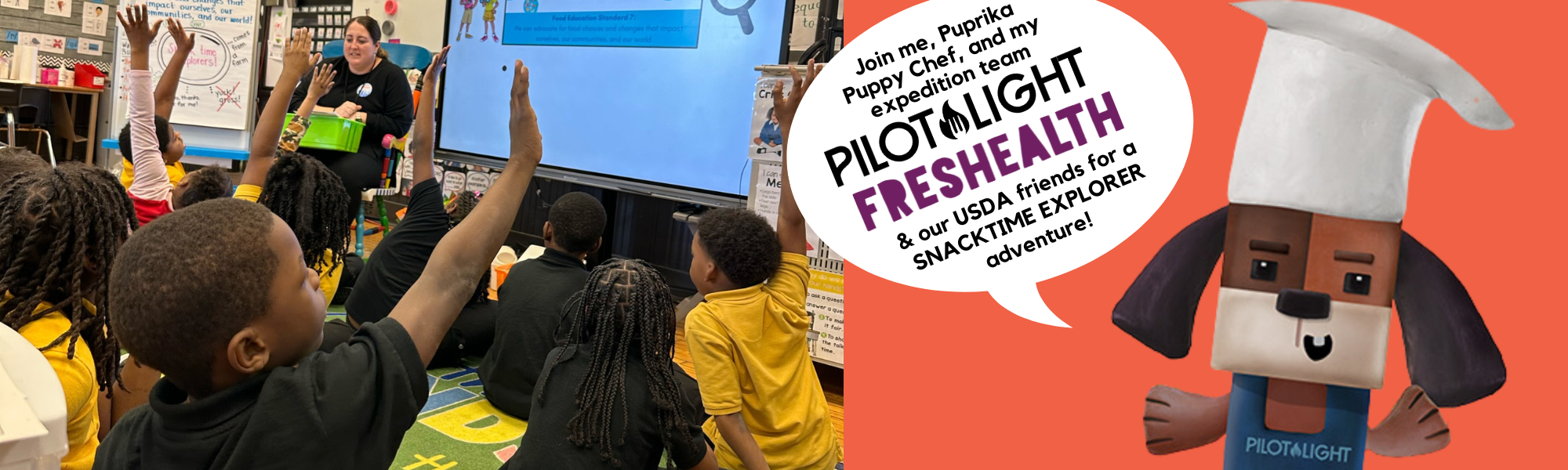
Pilot Light and our partners at FRESHEALTH are thrilled to announce that through the support of The Savage Family Office, we are joining The White House Challenge to End Hunger and Build Healthy Communities through the expansion of SnackTime Explorers!
The SnackTime Explorers expansion plan will grow the reach of the educational toolkit to include all 2.7 million students participating in the USDA’s Fresh Fruit and Vegetable Program (FFVP) by 2030.
What is The White House Commitment?
In 2023, The White House called on public and private organizations to join their challenge to end hunger and build healthy communities by designing innovative initiatives that will eliminate disparities and support communities most impacted by hunger and diet-related diseases.
Now, Pilot Light and FRESHEALTH are proud to answer this challenge through the expansion of SnackTime Explorers! We believe that this initiative has the potential to benefit not just students inside the classroom, but also to shift mindsets in cafeterias, families, and communities nationwide. Pilot Light and FRESHEALTH’sWhite House Commitment will expand the offerings of the SnackTime Explorers program and extend access to the toolkit via a new digital learning platform to all schools eligible for the USDA’s FFVP – over 16,000 elementary school districts nationwide.
How will the SnackTime Explorers Expansion Commitment work?
Through the support of The Savage Family Office, Pilot Light and FRESHEALTH’s commitment will invest in the future of SnackTime Explorers and the FFVP through a multi-tiered approach, including:
Expanding SnackTime Explorers content for all eligible grade levels, plus the creation of new educational content to maximize the toolkit’s effectiveness in the classroom.
Translating instructional resources into Spanish language for increased accessibility.
Growing the program’s geographical reach to FFVP schools in all participating states and territories.
Building asynchronous educator professional development resources, allowing SnackTime Explorers teachers to participate in their professional growth on their own schedule.
Launching a digital learning platform for educators to access SnackTime Explorers content as well as connect with other participating teachers for peer-to-peer support.
Investing in the long-term success of SnackTime Explorers through new evaluation practices, site visits, and educator leadership.
“Integrating Food Education into the classroom equips young learners with the knowledge and skills necessary to become informed leaders of tomorrow,” said Alex DeSorbo-Quinn, Executive Director of Pilot Light.“SnackTime Explorers provides teachers with the tools necessary in creating this long-lasting change in student mindsets that transfers out of the classroom and into their families and communities. We are honored to join this national movement to end hunger and build healthier communities through our expansion to all teachers and schools enrolled in the FFVP.”
Why is SnackTime Explorers important for FFVP classrooms?
The USDA FFVP (Fresh Fruit and Vegetable Program) provides funding to eligible elementary schools to purchase fresh produce served during classroom instructional time. Before SnackTime Explorers was created, the USDA recognized the benefit of an educational resource for teachers participating in the FFVP. Their research found that students were the most likely to consume more fresh fruits and vegetables when the produce snacks were distributed and consumed inside classrooms, and when teachers included an educational component that related to the daily snack. (Source: FFVP website)
Accordingly, Pilot Light and FRESHEALTH recognized the potential of an integrated Food Education model to support educators and promote student learning through their experiences with FFVP produce.
During the SnackTime Explorers pilot program in 2023, Pilot Light and FRESHEALTH quickly realized that the SnackTime Explorers toolkit had additional benefits for classrooms: the toolkit was promoting classroom engagement, while also inspiring curiosity in students, promoting connection between classmates and teachers, and increasing consumption of FFVP produce – exceeding initial expectations for the success of the program.
“SnackTime Explorers has been a refreshing and multifaceted approach to nutrition education for the Fresh Fruit and Vegetable Program at CPS schools,” said Ariana O Luster, MS, RD, LDN, School Nutrition Specialist for Chicago Public Schools. “It’s exciting, as administrators, to be able to offer a resource that guides our teachers andrevitalizes a key aspect of this beloved program, which adds to the educational and social experience of our students. The lessons, aligned with Pilot Light’s Food Education Standards, serve as a reminder that food represents daily interconnectedness to our internal and external environments.“
Where will SnackTime Explorers become available?
The SnackTime Explorers expansion aims to reach all participating FFVP elementary schools: currently over 9,350 across all fifty States in addition to the District of Columbia and the territories of Guam, Puerto Rico, and the Virgin Islands. By 2030, all schools that receive FFVP produce will also have access to the SnackTime Explorers resources which have been proven to increase student participation in FFVP snack time as well as promote classroom-wide social development and engagement throughout the school day.
At the USDA Food and Nutrition Service, we are working alongside our partners such as Pilot Light to meet the goals of the White House Conference on Hunger, Nutrition and Health and to advance nutrition security. We cannot do this important work alone, but together we can make progress that will change lives and ensure a healthier, more prosperous future for everyone in this country,” said Dr. Caree Jackson Cotwright, Director of Nutrition Security and Health Equity for USDA Food and Nutrition Service.
Who are Pilot Light and FRESHEALTH?
Pilot Light and FRESHEALTH, a Columbus, OH-based produce provider, originally teamed up in 2022 to co-create and distribute SnackTime Explorers. When our partnership began, we realized that there was an opportunity to add a Food Education component to the FFVP.
FRESHEALTH’s dedication to increasing access and consumption of fresh produce and Pilot Light’s dedication to supporting educators and students through comprehensive Food Education blended together to leverage the power of the FFVP and resulted in SnackTime Explorers. By introducing elementary students to fresh produce through engaging, multisensory learning experiences, SnackTime Explorers connects classrooms and provides educators with key resources that support the successful implementation of the FFVP.
The initiative launched in January 2023 in Chicago Public Schools and is currently operating in three Midwest school districts in the 2023-24 school year.
When and where will SnackTime Explorers expand?
“The way we feed people in this country is changing. With the endorsement of the White House, we are more motivated than ever to transform classrooms, cafeterias, and communities with the power of fresh produce,” said Alex DiNovo, President and Chief Operating Officer of FRESHEALTH.“Our partnership with Pilot Light is a strategic collaboration, drawing on the strengths of both the nonprofit and private sector. Together, we leverage existing USDA programs and draw upon the deep knowledge of classroom educators to make the maximum impact. This noteworthy endorsement fuels our mission to shape a healthier future for children across our nation.”
Pilot Light and FRESHEALTH currently project that the expansion will begin summer 2024. To learn more about SnackTime Explorers and download a FREE sample lesson, visit our new website: www.snacktimeexplorers.org.
How to Build a Teacher and Chef Partnership: Chef James Martin and Pilot Light Educators Paul Floyd & Rita Leary on how teachers and chefs can connect to create meaningful Food Education experiences
Since 2013, Pilot Light has brought together teachers and chefs to create hands-on Food Education experiences for students in the classroom. What started as a partnership between Founding Chefs Paul Kahan, Justin Large, Jason Hammel, and Matthias Merges and teachers at Disney II Magnet School in Chicago has grown into a national organization reaching nearly 25,000 students, over 275 educators, and 25 school districts through multiple programs.
Though Pilot Light’s model has evolved over the years, partnerships between teachers and chefs are still an important part of our mission. Chef perspectives offer students a new window into their local food system, and teachers see their students become more engaged and excited to learn. Today, we sat down with two Pilot Light teachers Rita Leary and Paul Floyd both of whom have partnered with Chef James Martin (Founder & Chef of Chicago’s Bocadillo Market) to discuss how their partnership benefited their students, classrooms, and themselves.
Thank you all for joining us! As you all know, a teacher/chef partnership is a key component of our annual Food Education Fellowship. I’d love to start by hearing from our Fellow alums about how their chef partnerships came to be.
Left to right: Pilot Light team members Eileen Torpy, Caitlin Arens, Alex DeSorbo-Quinn, and Middle School Science & Social Studies Teacher Rita Leary
Teacher Rita Leary (RL): My partnership with Chef James was something I started working on right at the beginning of my Fellowship year. Building our community partnerships was something that my school was really invested in at that time. Additionally, there was great interest from my students. However, the actual chef classroom visit ended up happening later in the year. This actually worked out really well, because the lesson was able to highlight all of the Food Education Standards that we had been learning about over the course of the year. It was really a beautiful culminating event.
A Pandemic Pivot
Physical Education Professional Paul Floyd
Teacher Paul Floyd (PF): I was actually approached by [Food Education Fellowship Director] Caitlin Arens to have a chef partnership in our classroom. My Fellowship year unfortunately happened during the COVID lockdown era, so Pilot Light was looking for creative ways to engage students, teachers, and chefs. We met with Chef James and had a meaningful discussion about what we wanted to do. Together, we decided to make a apple pancakes with a large group of 4th-6th graders over Zoom in a live cooking event.
Core Memories
What was really special about partnership with Chef James was that it gave us the opportunity to discuss entrepreneurship. At the time, Chef James was going through the process of opening Bocadillo Market, so it was great to have an example of an entrepreneur in my students’ community. He showed them what that process can look like, and brought a lot of information about the business side of the culinary world.
During the cooking demo, we distributed the ingredients for the apple pancakes to students so they cooked along with us. For weeks after, students were asking me follow-up questions: “When is James coming back?” “When can we cook again?” It became one of those core memories.
Chef James, I’d love to hear about how the teacher/chef partnership came about for you, and why you wanted to get involved in the classroom.
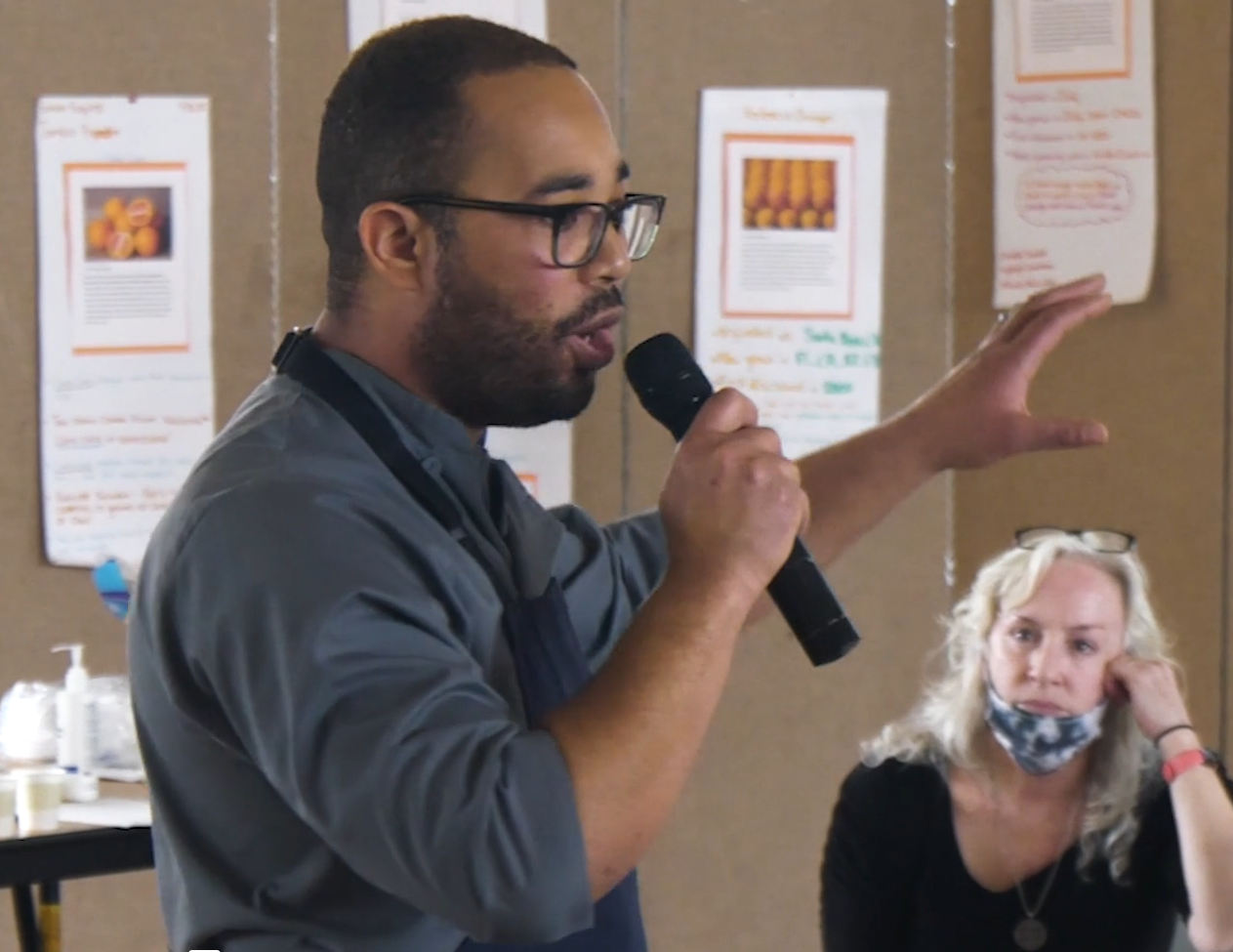
Chef & Owner of Bocadillo Market James Martin
Chef James Martin (CJM): Pilot Light made it easy for me to get involved. I had worked with [Founding Chefs] Matthias Merges and Jason Hammel in the past, and I was already connected with Caitlin. She’s definitely one of the biggest connectors that I’ve worked with. Once she introduced me to Paul and Rita, I saw their passion for their students and for education.
That passion allowed us to connect through food and help the students understand the power that food has in their lives. That includes the physical education, nutritional information, or the history behind the foods we’re talking about. All of those things were entry points that allowed Paul, Rita, and I to connect.
I think Pilot Light is such an amazing platform for chefs and teachers to connect food and academics. It makes the classroom really fun. Teaching the future about food’s role in our world is a big passion of mine.
Making it Easy
PF: I want to say something else about Caitlin. When I came in to that initial meeting, before I could contribute anything, Chef James had already created a PowerPoint. Caitlin had already created a grocery list and had worked out the logistics of dropping off the food. The structure of the Food Education Fellowship and the chefs that partner with them create an easy on-ramp for teachers to do these kinds of partnerships. They make it a really enjoyable experience to be a part of from the teacher side of things.
A Perfect Recipe
RL: When Chef James and I started talking, we wanted to meet the students where they were in the curriculum. In my social studies class, we were discussing cultural exchange along the Silk Road and then into West Africa and the trade routes for gold and salt. Chef James was able to take that to the next level by looking at food as a vehicle for cultural exchange. He took what my students had already learned about over the course of the year and brought it together in a sensory experience.
His visit brought those concepts home for the students. It was like this perfect recipe that I thought would be really hard to figure out, but became a natural extension of my curriculum.
CJM: I think Pilot Light is such a great community builder. As chefs, it allows us to connect with people that we may not see day-to-day. That includes teachers, students, and other faculty members, even other chefs and cooks in our community and the Pilot Light team themselves. It allows us to get out of our normal routine in our restaurants. With Pilot Light, I can get out of the kitchen for a little bit and connect with teachers like Paul and Rita and use our combined skill sets to create something new in the classroom and show students how food impacts the world.
Chef James Martin cooking at Pilot Light’s annual Feed Your Mind Gala. Photo by Shabari Bailey.
RL: It was remarkable to my students that a professional would take time out of their business and come to our school. It made a big impression on them. “Wow, he’s coming here?!” It made them feel very significant.
PF: When Chef James comes in to the classroom, he brings with him a depth of knowledge about food that we as teachers don’t necessarily have. Then, from the teaching side, we know about the pacing of a lesson and classroom management. It allows our unique set of skills to come together.
What was collaboration like for all of you during the planning phase?
PF: We started with the food. Because we were doing a cooking experience, we figured out what would be easy for students to make and built from there. My lesson had some more flexibility during our planning process due to the chaos of the pandemic. We wanted to give students something meaningful that they could enjoy and relate to. Then, James came in with his PowerPoint ready to go, and we were organically ready for the live virtual lesson.
Connecting Through Food
CJM: Paul and I had talked over the phone and email before the lesson, but the cooking demo was the first time we met in person. When we filmed in the common area kitchen of his building, and we connected really quickly. I think we share some of the same bonds: helping the community and making the world a better place through education and food. I love making sure the youth, the future, knows more about the world around them.
To me, food is business. It’s history. It’s creating recipes, so it’s also math: you have the academic side of things. I also think it’s important to show students that it’s been done before and what’s possible for them. In Paul’s case, we were on Zoom, so we were showing them that we still can have connection with people even in lockdown. We were able to come together to do something that everyone loves: no matter what culture you come from, everyone loves pancakes! Everyone loves apples!
We also talked about the nutritional value of what we were cooking. Additionally, we talked about all the varieties of apples and how some don’t even make it to the store. Kids love learning those facts and little details that go into their food. All of it is impactful.
A Lesson in Entrepreneurship
Paul Floyd & Chef James Martin teach an apple pancake lesson in 2020
PF: I think Chef James brought like, thirteen types of apples. He had labels for them all, it was incredible. We also talked about his entrepreneurial experiences. Having that example was a really important piece for my students. I think those conversations were even bigger than food, bigger than the classroom.
One of my students at that time was interested in opening a restaurant as a career path. She lives in a community where there aren’t a ton of entrepreneurs, so seeing Chef James’ example, even as a ten year old, helped her understand that process more.
Different Ways of Learning
CJM: It’s nice to see teachers like Paul and Rita who want to make those connections outside of the day-to-day classroom because kids learn in different ways. For me, I grew up learning by watching my parents and the other people around me. My mom taught me how to write checks at a young age — it’s the little things. A lot of people don’t get those hands-on experiences.
Working with educators like Rita and Paul, I see kids learning more of those life skills. They learn how to connect what they learn in the classroom to the bigger world around them.
Apples & Oranges
RL: Your visit opened up so many doors of inquiry. It’s funny, your lesson with Paul was apples and the lesson in my class included oranges: we’re talking apples & oranges today! Chef James brought in all these varieties of oranges and students’ eyes were opened just to the simple fact that all these varieties exist. Then, you broke down the [Spanish spice blend] Andalusian spice components. Students were like, “Oh, this is like seasoning salt.” Then, we were able to research and break down what’s in the seasoning salt they’re used to buying at the grocery store.
Doors of Inquiry
There was all this inquiry that came out of that one experience, including looking for recipes that use oranges. When it started to get warm, students researched how to make their own orange julius. I have a student who is vegan, who previously got teased for it. He found vegan orange French Toast and was able to share that with us. Then, one of my aspiring chef students asked the vegan student if he could help plate the dish. He wanted to help make it look beautiful for everyone. They weren’t even really friends before that, but they shared that connection. It was a really beautiful experience that all stemmed from this chef partnership lesson.
How did you all see students responding to the chef lesson?
CJM: Seeing the kids engaged was really rewarding. Especially when you start the lesson, and you see some students off in the corner in their own. Then, they start to realize “Oh wow, this is actually really interesting.” In Rita’s class, we talked a lot about the cultural exchange between North Africa and Europe and how music, fashion, architecture, and food were all a part of that. With Paul’s students, we talked about seasonality and varieties of apples, nutritional values and flavor profiles. It was very interactive.
For me, it’s exciting to see because learning is different for every person. Food Education allows the students to learn in a different fashion. It gets me pumped up, too!
How a Lesson Grows
PF: Rita, your lesson sounds so interesting. I’m so curious about what you guys did!
Chef James & Rita during their classroom partnership day
RL: Really, it was amazing because the students really ran with it. Chef James, you shared your story with my students. A lot of that story was about how your family and upbringing influenced your career as a chef and entrepreneur. We talked a lot about that as a class. After that, in every unit we studied afterwards, students were asking: “What could we prepare here?” “What would be an authentic recipe?”
I’m telling you, I had students that were like: “I’ll find the recipe!” “I’ll do the research!” “I’ll make the shopping list!” It became a thing of its own. It’s exciting because their learning became less on me. They’re the ones doing it for themselves. It started as that one chef visit and then it just blossomed.
What was personally and professionally rewarding for each of you about this experience?
Food as Identity
PF: The Food Education Fellowship is incredibly engaging. It facilitates conversations that are bigger than the classroom, bigger than food. As an educator, that’s what you’re always trying to get to.
I think a big part of the reason Food Education works is because food is so related to our identity as individuals. It allows students to relate on an identity level. Once those connections are made, it creates a strong and unique bond. Pilot Light’s unique quality is that it creates an opportunity for students to relate on that identity level, which then makes content easy to implement. It gives them a great opportunity to connect to each other and themselves.
Chef James and I have become friends after this experience — he was just at my wedding! Our friends and families have connected over the years as well. We have a great community of driven, supportive people from both the chef and teacher backgrounds.
A New Perspective
RL: After 30 years of being an educator, I started using Food Education in the classroom. It showed me the benefit in releasing control, and allowed my classroom to expand in ways that I couldn’t predict. It was a welcome and beautifully supportive outcome. I credit Pilot Light, Caitlin, and Chef James’ flexibility for making it a seamless of a process for me.
Personally, I learned to see my students through a new lens. Food Education helped me see their culture, their identity, their dreams, their adventurous side. To be willing to research foods and share things with their peers: it’s a vulnerability in a way. It’s been a really nice thing to see late in my career. I’ve learned a lot.
Building Community
CJM: Pilot Light is a community builder in a lot of ways. Not just connecting classrooms, but connecting the city of Chicago. Or, wherever their teachers are! Pilot Light is definitely growing, so I can’t just say Chicago anymore!
Paul, Rita, and I all live in and represent different neighborhoods, but we’re really close. Sometimes, Chicago can feel very spread out. Like you’re a country away from your neighbors. But I think Pilot Light connects that community. It connects brilliant people together to foster relationships through food and education. This opportunity allows us to make the world a better place through the youth!
Photo by Shabari Bailey
At the end of the day, we have to teach them that education is the key. I think showing the youth that adults are excited about education and are able to make it fun is really important. I’m sure Paul and Rita are tough in school when they need to be, but they make it fun when I come around! Pilot Light allows education to become a more interactive.
Can you share a piece of advice with teachers and chefs who are interested in building a partnership?
Know Your Strengths
PF: I was very lucky to have Caitlin and James as my partners in this. Like I said before, they had most of the project ready by the time I came on. I worked to figure out where I could contribute. I think knowing what your strengths are, what you can give, and making sure you have clear communication within your partnership are all key.
Go For It
RL: All I can say is: “Go for it!”If nothing else, remember Food Education Standard #1: Foods connects us. Just start there. Everything that will blossom out of it will take you the rest of the way. If you start to overthink, it will seem daunting. You just have to go for it. Collaborate, take baby steps if you need to. I think Paul’s lesson with cooking sounds great for virtual learning. For us, we had just come back to in person learning, so coming together as a whole middle school for Chef James’ presentation was a great way to connect. Whatever shape it takes, go for it.
Share Your Story
CJM: For future chefs, I would say don’t hold back. Have fun with the students and don’t be afraid to share your story. I shared my story: my love for food, my love for education, and how much I’ve learned about myself through my passions. Making it inspiring so that students have something to look up to. Show that as long as they put the work in, they can do whatever they put their mind to.
Thank you to Chef James Martin, Paul Floyd, and Rita Leary for sharing your stories and showing your incredible passion for Food Education! If you’re interested in bringing Food Education to your classroom or home, check out our free online lesson plan library and sign up for our newsletter to learn more about the Food Education Fellowship and Pilot Light’s other Food Education programs!
Happy School Lunch Week!This year, Pilot Light is all about Celebrating School Food though sharing stories of classroom connection and mealtime memories from our community of educators, chefs, staff, and other supporters.
Today, we sat down with Pilot Light 2022-23 Fellowship Alum Corrina Hargett, a 9th-12th grade Career and Technical Education (Early Childhood Education, Intro to Teaching, Psychology, Computer Science) and Family Relations Educator in Newport, OR. to discuss her partnership with her school food and gardening teams. This partnership was years in the making, and their collaboration deepened during Corrina’s time in Pilot Light’s Food Education Fellowship. Corrina, along with her school’s nutrition team and school garden coordinator, wanted to find a way to involve students in the process of growing the food served in the cafeteria. Their goal was to promote student participation in school lunch by giving them hands-on roles in their school’s food system. Over the course of the year, students took on leadership roles in the garden, and worked with Corrina and Sarah to learn how to grow and prepare their own food and herbs.
Pilot Light (PL): How did the idea of this partnership come to you?
Corrina Hargett:When I was first teaching Early Childhood education, I came across Farm to School programs and I was inspired by Michelle Obama’s “Let’s Move” campaign* back in 2010. I was working with young students at the time and they were able to go out into the garden and they prepared healthy snacks for our preschool students for years.
About five years ago, some graduating students went back to the elementary school for a visit and they saw that the fresh foods they had access to were no longer available for the next generation of students. A group of parents also got involved and advocated for fresher, healthier food options. Our principal loved the idea and got involved with bringing the school garden program back.
During the COVID shutdown, our school food team got very involved and energized by delivering lots of meals to families in our school community. Once I saw all these pieces individually, the idea of them coming together just made sense: if we’re going to be growing food on school grounds, let’s figure out how to translate that to our school cafeteria!
We are also a free and reduced lunch school, meaning we offer free lunch and breakfast to all students. Part of the goal was finding new ways to boost student participation so more kids would get involved in this amazing resource that our school already offers.
*Fun fact – this initiative was also the inspiration for the founding of Pilot Light! Learn more about the history of Pilot Light here.
PL: How did this project impact your classroom environment?
Corrina Hargett: Something that was great about the project was that students from all of my subject areas were able to own a piece of it in some way.
My Computer Science students got to help build the garden beds. Even my homeroom students got into interact with our Grow Tower since I had it in my classroom. I think just having living plants growing helps the kids in their environment for learning.
PL: How did these experiences change student mindsets during the school year?
Corrina Hargett: For me, it’s always interesting because some of the kids who are more shy or might be quieter in class have a very strong sense of confidence in the garden…that to me is one of the most special things.
We also had students make handmade tortillas with a press, and it was the same thing. A lot of our Hispanic students last year really took this project and ran with it. I think it was a way to celebrate student strengths.
[Our school garden coordinator] Sarah Gibson has also talked with my classes a lot about the importance of spices: how we can bring in enhancing spices to make our food taste more delicious. Last year, students helped grow things like rosemary and coriander that the nutrition services team use in the cafeteria.
Right now, there’s competition in our area for students’ choices at lunchtime. We’re working to help them understand the value of a dollar, and how to save money while also taking pride in the work we’re doing. They’re helping grow the food, so they know where it’s coming from — it’s not salad from a bag, it’s coming from our Grow Tower.
Sometimes, the food didn’t even make it to the cafeteria – students were just harvesting radishes and just ate them! Strawberries never make it out of the garden. Same thing with peapods – some things, students eat them almost as quickly as it can grow. That, to me, is really exciting.
I’ve had some students sample freshly grown produce in the garden and say things like “this isn’t broccoli, I don’t like broccoli!” They’re noticing that it tastes different and fresh straight from the garden.
“The other piece that is important to instill in students is how important it is to be self-sufficient and be able to sustain our own nutritional needs. Sarah was just talking yesterday about how the recent heatwave in California made a lot of the lettuce molt. We’re growing spinach and arugula in our Grow Tower, so, we’re trying to show our students how we’re blessed here in Oregon to have access to lots of great natural resources and agriculture.”
PL: What experiences in the garden got your students engaged and excited to participate?
Corrina Hargett: The one garden item I see them get the most excited about is strawberries. They love to be the ones who weed in the spring because they can be the first ones to discover the strawberries coming up. We have berries that keep growing through the summer and into the fall.
We also had an apple tree that did really well this year. Between apples, strawberries, blueberries, sweet peas…I think students get excited when they see something that went into the ground as a seed come up and turn into something new. They’re like, “it really is growing!”
There’s a number of students that also take a lot of pride in the hard work they put into the garden. Being able to say “I cleaned up that patch — that’s my spot.” I think it really addresses overall wellness. There’s also the social aspect: being out in the garden with your friends watering and planting. I’ll have students take turns when they need a wellbeing break during the day. I have over 214 high school students per day – the garden gives us the opportunity to work together as a team. We all have this vision that is going to benefit the entire school by bringing what we grow into the school cafeteria. This is where we say, “this is how we benefit the school.”
PL: I think we’ve been hearing more and more classroom stories that speak to that aspect in recent years: we hear from educators that hands-on Food Education experiences let more students shine and participate in ways that make them feel confident and empowered.
Corrina Hargett: To add to that, I was asking my class just the other day about what their favorite family recipes and meals are as way to start conversation. My Special Education students really were comfortable and excited to talk about it because it was something they knew…they didn’t struggle with it at all.
“I think for me the garden has always been all-inclusive. Even the weeds have some importance to the system. I think it’s a really important representation of how everyone has a space and a place. The garden is accepting of everyone. Even if we try something and it doesn’t work out, that’s okay. We’re going to keep trying.”
PL: What do you see the future of the partnership becoming?
Corrina Hargett: Last year went by so fast, and I think we were only able to scratch the surface of what’s possible.
Just this morning, the school nutrition team brought homemade granola bars and fresh apples to the students during homeroom. Nutrition Services is really showing that they want to support the students’ learning and their school environment. I think it’s having a really positive impact – just for the students to know that we care about their nutrition is really big.
This week, we had our first Garden Club meeting of the year. We’re talking about surveying the students so we can reflect more of their voices into our plans for the future. We want to find out what food they’re looking for in the cafeteria and give them a voice. We just had Hispanic Heritage Month, and we’re looking at other celebrations that we can do over the course of the year to help bring in other cultures and give the students maybe some more familiar foods that are also healthy.
We’ve also added an endless soup and salad bar this year, so in addition to the entrees being served, students can have as much soup and salad as they want.
This summer, I had students who worked in the garden get to come back as paid garden interns and continue to cultivate what we started growing last year. They’re excited to build on the work that we started and continue to see what they planted grow and change.
Corrina and the Garden Club meet to discuss plans for the upcoming school year
PL: Did you learn anything new about the world of school food and nutrition while working on this project?
Corrina Hargett: I think our nutrition team is amazing, but they have a lot of regulations and things that they have to work in. I don’t think everybody really understands the parameters that they’re working under.
Then, it’s just the sheer number of people that they’re providing nutrition for, especially when you compare it to regular family-size meals that we prepare at home. Proportionally, that’s a huge difference. I admire how seriously they take their jobs.
Sarah Gibson and our Nutrition Service Lead Jamie Nicholson just attended a Farm to School seafood event in Portland. That meant we got to have shrimp in our school lunch and even serve ceviche – we’re really trying to source local seafood in addition to the garden produce, so that’s exciting.
PL: Do you have any favorite cafeteria memories, either from your time as a student or a as a teacher, that you can leave us with today?
Corrina Hargett: A favorite memory in recent years has been recruiting students for our community service clubs during lunch time. I lead our Junior Optimists Club, and it was great to go in to the cafeteria and actually recruit freshman students who committed to a full four years of our club. That class just graduated last year, but now their younger siblings and other students are carrying it on.
I would really like to see the Garden Club actually have a presence in the cafeteria itself and become a part of making that environment one that feels good for everybody to come together in. We also might try to have students invite teachers to the cafeteria to celebrate School Lunch Week this year…we’re trying to find ways to make the cafeteria more appealing so kids feel that they have a safe place to go.
Another fun memory is that I have a former special education student who, since graduating, joined our cafeteria team and works every day with the nutrition services team. He’s been very successful as a school employee, so that’s been another highlight for me. It’s great to see local students graduate and enter the food service team and stay a part of our school.
Thank you so much to Corrina, Sarah, Jamie, and their school community for your dedication to improving students’ lives through Food Education, gardening, and nutrition. We celebrate your partnership and all of your hard work making the cafeteria a safe, nourishing environment for your students!
We are thrilled to announce that we have welcomed 25 new educators to our 5th Annual Food Education Fellowship! This week marked the official beginning of what is sure to be a fantastic Fellowship school year!
Summer Institute
Last week, our new cohort of educators joined us for our Summer Institute: a virtual, two-day marathon of brainstorming and planning for the upcoming school year. During the Institute, Fellows learned about our Food Education Standards, met with Pilot Light staffers, and began planning how they will integrate Food Education into their weekly classroom learning this coming school year.
We’re sending a special thanks to Institute speakers Larkin Podsiedlikand Amy Anderla. Larkin, Executive Director of the Cornell Cooperative Extension of Madison County, kicked off the professional development sessions for this year’s Fellows. Additionally, Amy offered her insights as a member of our Fellowship Alumni Network. Insights from previous year’s Fellows like Amy, combined with the institutional knowledge of our professional development speakers like Larkin, made a great combination for this year’s cohort!
Meet the Fellows
This year, we received more applications for our annual Fellowship than ever before! We are so excited to welcome this amazing cohort of educators to the 5th annual Fellowship. This year’s Fellows features:
13 Chicago Educators
5 Educators on the East coast – New York, Maryland, Delaware, & Vermont
1 Educator on the West coast – California
6 Educators in the South and Midwest – Arkansas, Minnesota, Oklahoma, Louisiana, and Illinois
During their year as Fellows, these educators will integrate Food Education topics into their weekly classroom learning. In addition, they will attend monthly professional development sessions, participate in peer-to-peer coaching, and lead their classrooms in a community partnership and food advocacy project. 8 of this year’s Fellows teach Pre-K and elementary students, while 7 teach middle school, and 8 teach high school. We’re so excited to partner with educators to bring Food Education to a variety of students this year.
Get to know our 2023-24 Fellows better by checking out their bios! We’ll be sharing stories from their classrooms and more about the Fellows in the coming months.
Be sure to follow @pilotlightchefs on social media and send your best wishes for the coming school year to our Fellows past and present!
Pilot Light Receives a USDA Farm to School Grant to Expand the Food Education Fellowship!
Pilot Light is thrilled to announce that we have been recognized as a 2023 Farm to School grantee! A USDA-funded program, Farm to School awards grants and provides resources to organizations that offer food and nutrition education programs that promote local food and agriculture in schools across the country. Read their full press release here.
Pilot Light’s Farm to School award will support the expansion of our Food Education Fellowship, including the introduction of our Fellowship Alumni Network and the continued expansion of our online Food Education Center.
The Fellowship Alumni Network (FAN) was introduced earlier this year and now comprises over 70 educators nationwide. FAN members are are committed to utilizing Food Education in their classrooms beyond their year in the Fellowship. The support of the USDA – totaling $199,245 over two years – will help us continue to invest in these educators as the leaders of the rapidly growing Food Education movement. Additionally, we are excited to be able to deepen the impact of the Fellowship in Chicago and expand significantly in New York City and Onondaga County in New York State, including the Onondaga Nation.
“Each year, Farm to School grants help fund projects that will increase the amount of local foods served through child nutrition programs and help educate children about where their food comes from,” said USDA Food and Nutrition Service Midwest Regional Administrator Dr. Vista Suarez Fletcher. “Farm to School activities bring education alive through experiential learning opportunities, such as growing plants in the classroom or school gardens, tasting new specialty crops, or visiting local farms. Pilot Light serves as a great example and model of how Farm to School activities help bring hands-on food and agriculture experiences to students, setting them up for life-long healthy relationships with food.”
The Farm to School grant will also help Pilot Light educators create long-lasting community partnerships with local organizations, businesses, farmers, restaurants, and more. The ability to help foster these relationships is essential not only to the growth of Pilot Light’s impact but also to our continued commitment to our mission, vision, and core values.
Food Education Fellowship Director Caitlin Arens is exhilarated by the positive impact the Farm to School award will bring to the Fellowship’s community partnerships: “So much of what makes Pilot Light and Food Education relevant is the understanding that Food Connects Us – not just to each other, but to the soil, plants, animals, the ancestral stewards of the land that we are merely guests on, and to the current and future leaders of the food system. We are grateful and humbled to work alongside community organizations already doing essential food justice work in their communities, and thrilled to help showcase the relevance of their work to students and educators alike.”
Pilot Light is also honored to be recognized alongside our partners at SOFSA in Syracuse and our teaching partner and The Neighborhood School in New York City, as well as several other organizations in Chicago, New York, and beyond that we have worked with in the past. Find the full list of Farm to School grantees here.
“Now entering its fifth year, The Food Education Fellowship has empowered 70 passionate and talented educators with the knowledge and tools to engage thousands of students through Food Education,” says Alex DeSorbo-Quinn, Pilot Light’s Executive Director, “We are grateful for this investment from the USDA Farm to School program, which will expand the Fellowship’s reach and impact in Chicago and New York State by connecting classroom learning to community-base organizations and local food. Together, we are equipping our next generation with the knowledge and skills to make informed choices and to advocate for a more equitable and sustainable food system.”
Every school year, our Food Education Fellows create thoughtful, engaging lessons for students to learn about the connections between food and their daily lives. Today, we would like to highlight one particular Fellow Lisa Ernst, a 6th grade teacher at Alice Fong Yu Alternative School, who teaches her students about the importance of food in the Asian American heritage year-round. Over the past few months, their learning has culminated into beautiful art the students created for the inaugural Art and Food Expo Event held this past April. To understand the story of how this cultural event came to be, we have to go back to Lunar New Year this past January…
January
Lisa’s students learned about the symbolic purpose of food for Lunar New Year. They discussed how traditional foods like nian gao (New Year rice flour cake) and tangyuan (dessert rice balls served in hot broth) are important for cultural celebrations.
Lisa then took inspiration from the online interview series #ChineseFoodiesofIG to pose the question to her students “what does home taste like to you?” Students explored their most formative experiences with food through the lens of their individual experiences and cultures, and were given creative freedom to imagine their dream dinner party guests and dishes through an essay writing exercise.
February
Lisa’s students had a busy month collaborating with parents and grandparents in their community to prepare for the annual Chinese New Year festival! Students and community members came together to make and distribute traditional treats at a street fair hosted by their school. Upon arrival, event attendees heard children speaking Cantonese and Mandarin and browsed booths featuring various games, art, and presentations from elementary to middle school students honoring different Chinese New Year traditions.
This annual event was a huge success, and the students and school community were even featured on their local ABC news affiliate for their unique blend of food, art, language, and community building.
March
After months of work, Lisa’s students put together an all-encompassing project called “Pieces of Social Justice.” Students were inspired by their Food Education experiences and produced artistic reflections on food, tradition, and the practice of sustainability in cultural contexts. Lisa’s students created thought-provoking pieces of art currently on exhibit at the Asian Art Museum in San Francisco, California.
To tie together the year’s worth of knowledge and experiences in Lisa’s classroom, the Alice Fong Yu school held the inaugural “Art and Food Expo” for Lisa’s 6th grade students. This was an opportunity for everyone in the community to appreciate the students’ insights and reflections and learn more about the connection of food and social justice in the Asian American community. The event included student-assembled refreshments, including a mix of store bought and school garden-grown produce and a fried rice cooking demo from Lisa’s colleague, Ms. Zhao conducted in Cantonese. Students also displayed a series of street art pieces centered around food, and a moving art installation featuring music specifically chosen by each student, and even designed their own chef’s hats!
Additionally, parents were able to tour the school garden and meet the new chickens their children had helped to raise over the course of the school year. Students and their parents had the opportunity to take photographs together on the red carpet as a keepsake for the event.
Today
As we reflect on all the work put into this event, we see it as a testament to the beauty of partnership between a classroom, parents, and community. Thanks to the hard work of Lisa and her fellow educators, around 175 parents, staff, and students joined together for an evening of food, art, and education.
We can’t wait to see how this event will change over the years thanks to the hard work of Lisa and her colleagues at Alice Fong Yu. Thank you, Lisa, for your incredible thoughtfulness and commitment to bringing students’ identities to life through events like these.
Read Puprika’s ADVENTURE NOTES from Real SnackTime Explorer Classrooms!
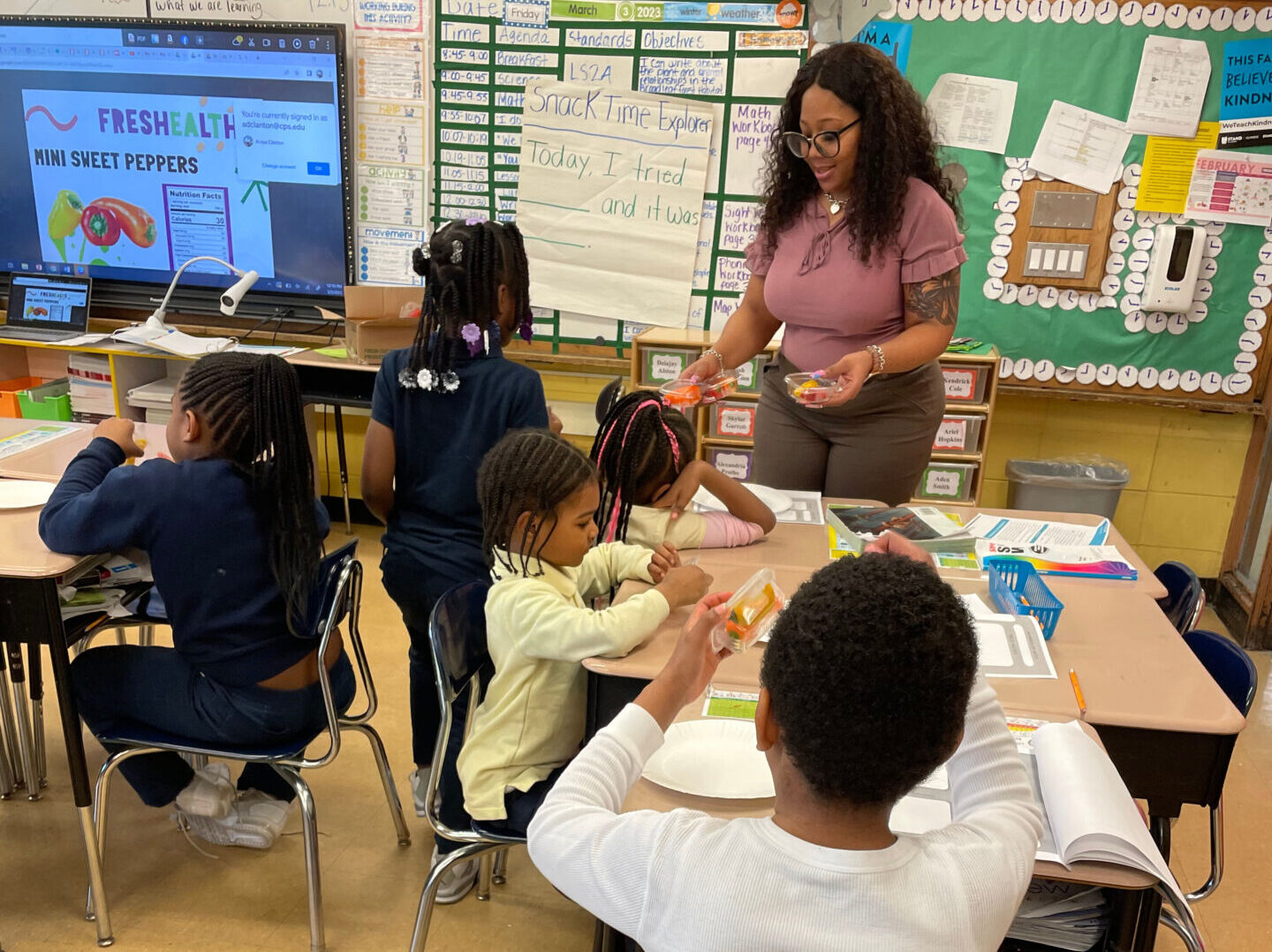
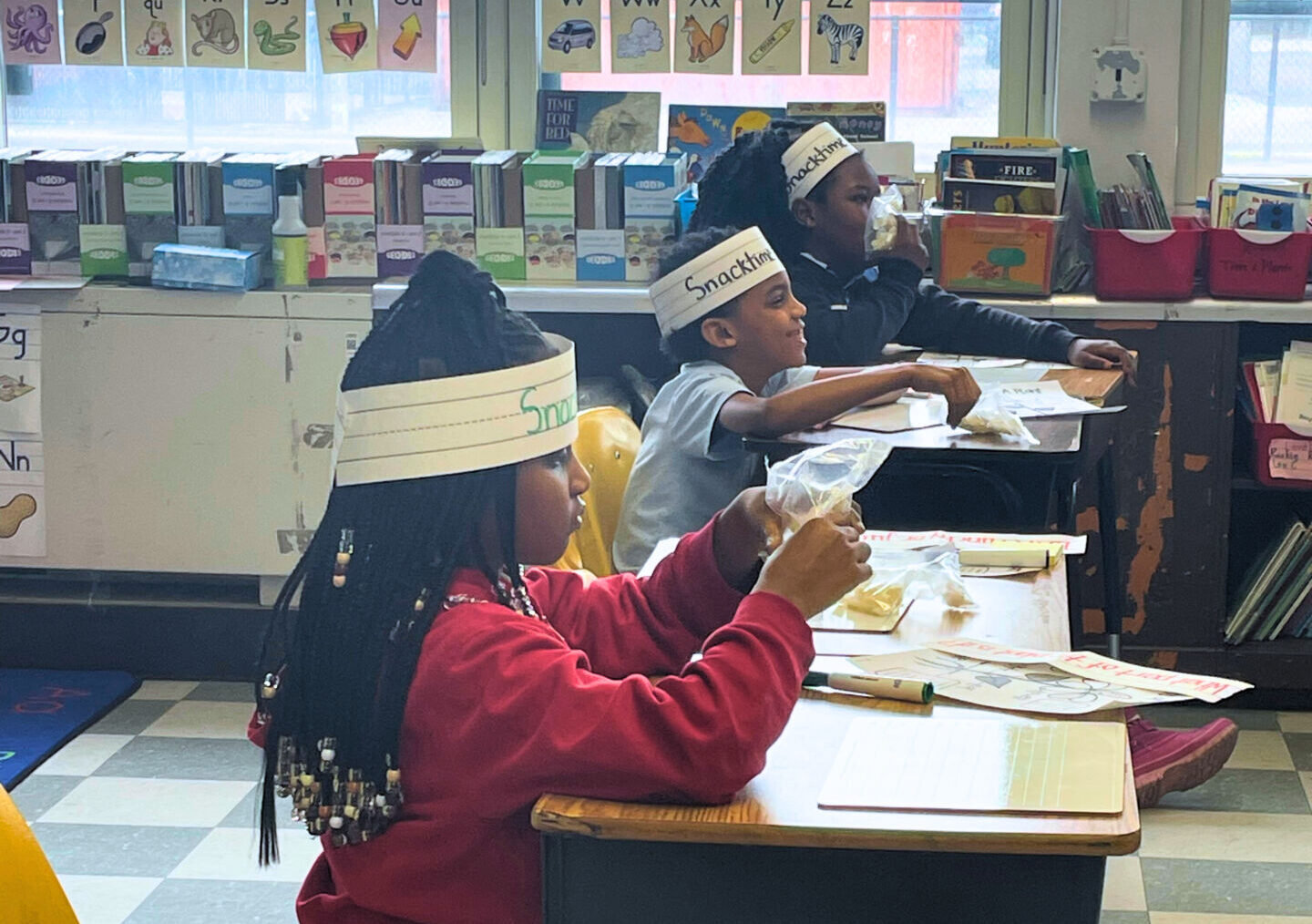
Greetings, Explorers! My name is Puprika, puppy chef and leader of the all-new SNACKTIME EXPLORER expedition team! Over the past several months, Chicago Public Schools 2nd grade students have embarked on weekly explorations of Fresh Fruit and Vegetable (FFVP) snacks, fresh produce snacks delivered to their classrooms from the USDA. SnackTime Explorers don’t just eat their FFVP snacks: instead, they journey into the world of fruits and vegetables. SnackTime Explorers can transform a simple orange slice into an exciting exploration of taste, smell, texture, and sound.
My friends at Pilot Light & FRESHEALTH wanted to learn more about these brave new SnackTime Explorers adventurers, so we banded together to travel to their classrooms across Chicago to encounter them firsthand. Along the way, we even teamed up with a special guest from the USDA who helped us observe the SnackTime Explorers in action! I’m offering you very special access to my field notes from our expeditions – read on to find out exactly what we learned…
EXPLORATION #1: BLOOD ORANGES
First stop on our expedition was a 2nd grade Chicago classroom exploring the exciting world of BLOOD ORANGES. These juicy, vibrant snacks have a name that may be frightening for some, but the SnackTime Explorers we visited embraced this exploration with no fear!
My expedition partner Eileen Torpy (Pilot Light Dir. of School & District Partnerships) took special note of Explorers’ knowledge of their snacks’ nutrition values: when their teacher asked the classroom “If we take a bite of blood oranges, what vitamin will we be putting in our body?,” one bright young SnackTime Explorer replied confidently, “Vitamin C!”
Eileen also took special note of the confidence and skill of the teachers leading their SnackTime Explorers on each adventure, writing in our adventure notes: “one of the best things is being able to see different teachers use the SnackTime Explorer toolkit depending on their individual teaching style. Teachers are able to adapt the toolkit to fit what works best for them and their classroom, which means every SnackTime Explorer gets to be the leader of their own adventure!”
EXPLORATION #2: WATERMELON RADISHES
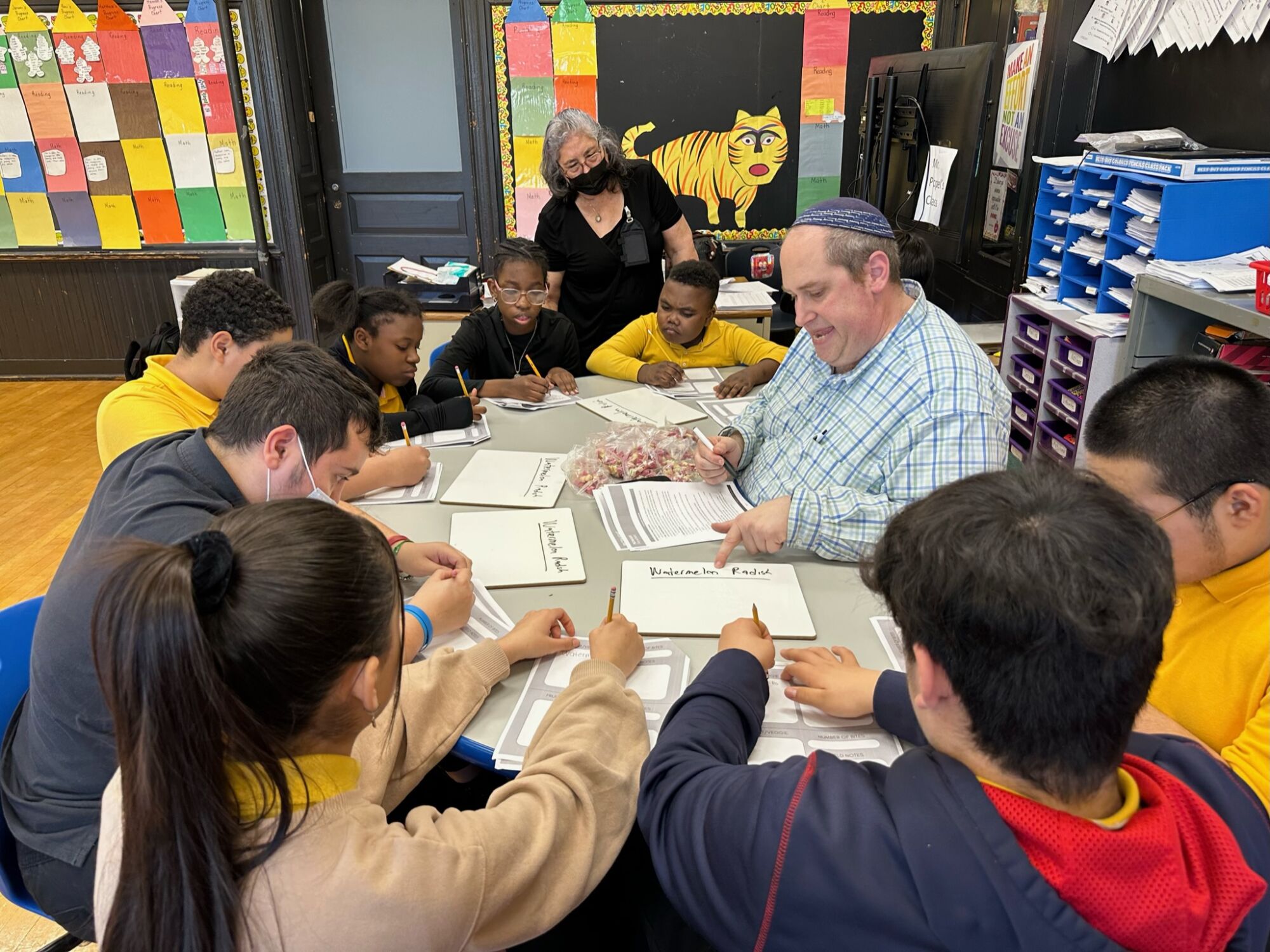
On our second exploration, our expedition team was lucky enough to witness a group of SnackTime Explorers who were experiencing WATERMELON RADISHES. Most Explorers had never encountered this fruity-sounding vegetable before, and initially expressed a healthy skepticism of the unknown snack. However, another experienced teacher reminded their students of the SnackTime Explorer credo: “We don’t yuck someone else’s yum!” Over the years, this motto has helped change my own canine ways of thinking & talking to other puppy chefs about their food choices, so seeing these young SnackTime Explorers practice saying “It’s not for me, thanks!” instead of “Ew, gross!” sent my tail wagging!
Marissa Dake, my FRESHEALTH expedition partner, took special note of the creativity demonstrated by these SnackTime Explorers during their adventure: one of them even said they would put watermelon radishes “on my salad AND in my yogurt!” A young Explorer with excellent chef instincts!
EXPLORATION #3: SUGAR SNAP PEAS
For our third & final expedition, I was joined by Alex DeSorbo Quinn (Pilot Light Executive Director) and an extra special guest from our friends at the USDA, Vinh Le (USDA Food and Nutrition Service Midwest Region)! I was extra excited to explore with Vinh because he and his teammates at the USDA are responsible for the whole Fresh Fruit and Vegetable program – without them, the SnackTime Explorers wouldn’t have fresh produce snacks to explore!
Vinh was a thoughtful and enthusiastic expedition partner. In our adventure notes, he wrote: “It was great to see Pilot Light’s SnackTime Explorers Fresh Fruit and Vegetable Program in action. The hands-on nutrition education session about SUGAR SNAP PEAS was great. Seeing the curiosity and excitement on the student’s faces really demonstrates how enriching this experience is.”
This adventure was special because we observed SnackTime Explorer students leading the task of sorting and delivering the FFVP snacks to many different classrooms throughout their school, as well as taste testing the sweet and crunchy pea pods for the first time ever! My expedition partner Alex took special note of the Pilot Light Food Education Standards being used during the adventure, and the unique way an Explorers’ mindset can transform from hesitant to curious to enthusiastic about trying a new food!
ADVENTURE SUMMARY:
Looking back on these adventure notes, I’m happy to report that the Pilot Light & FRESHEALTH SnackTime Explorer teams across Chicago have gotten the chance to experience new and delicious snacks, as well as the opportunity to practice thoughtfulness, self awareness, and social awareness with their expedition teams! But don’t take my puppy chef word for it: several SnackTime Explorer teachers report students demonstrating curiosity, excitement, and thoughtfulness during and after their weekly explorations. I think this SnackTime Explorer educator said it best: “Students are now mindful of what they say about foods they like or don’t like and how what they say will impact others. They frequently remind each other of the impact of their words.”
After these successful adventures, I’m looking forward to kicking back with some watermelon radishes and reviewing all my notes and findings from the field. Until next time, this is Puprika puppy chef, signing off!
Notes from Taylor Meredith, Education Strategy Consultant for Pilot Light & former elementary school teacher and instructional coach with experience in New York City and suburban Chicago public schools.
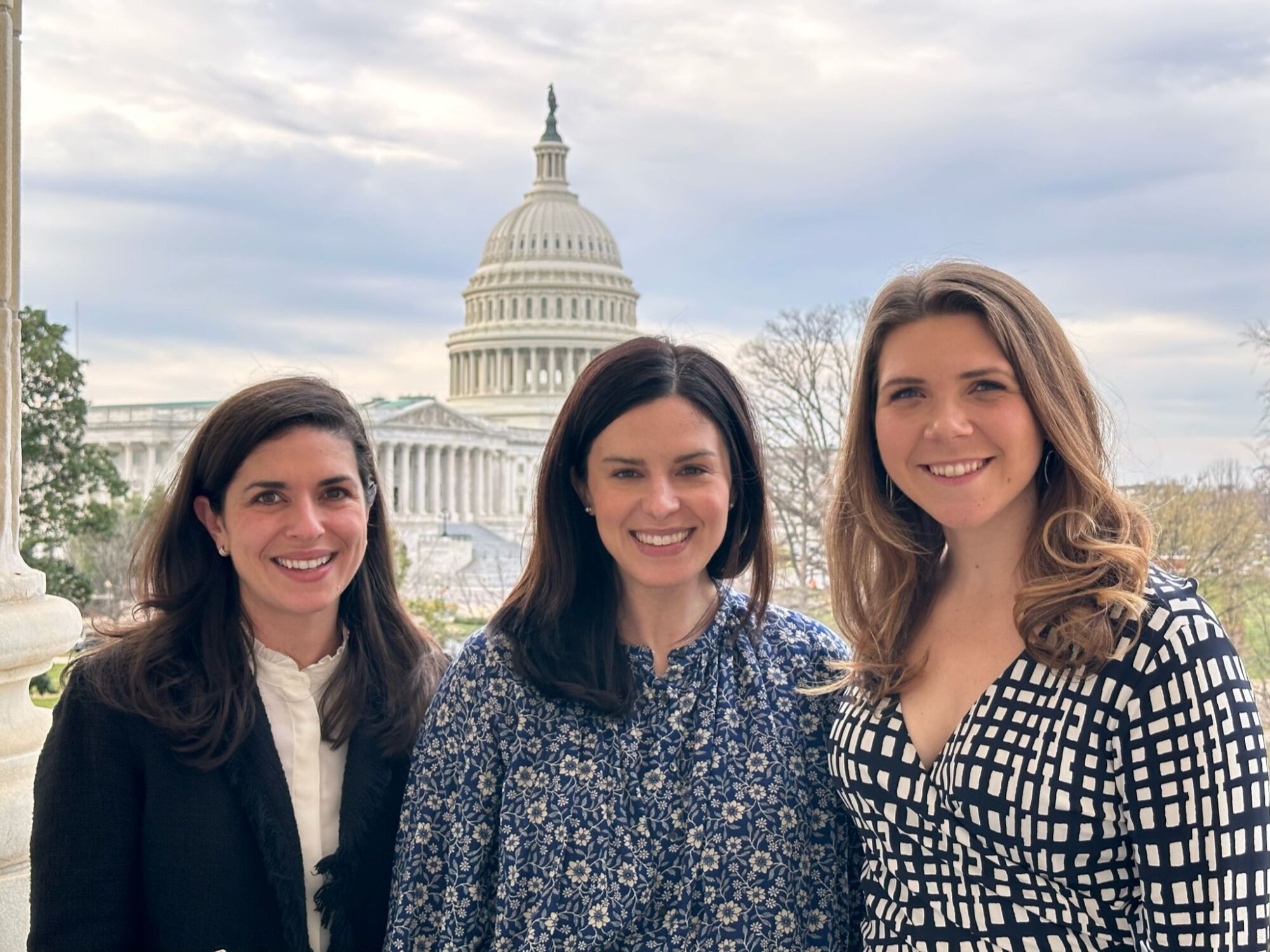
On March 1st & 2nd, I had the exciting opportunity to live out the values of Standard #7 . Joined by Alex Desorbo-Quinn (Pilot Light executive director) and our partner Marissa Dake (FRESHEALTH vice president of Brand & People), I traveled to in Washington, DC, to share the promising potential of our SnackTime Explorers toolkit on the USDA’s Fresh Fruit and Vegetable Program (FFVP). While on Capitol Hill, we met with 15 key offices in both the House of Representatives and the Senate to advocate for the future of this important pairing.
Alex and I brought stories from Pilot Light’s classrooms which sparked curiosity and engaged many lawmakers in inspiring conversations about the importance of Food Education. We even got to hear some staffers’ own experiences with Food Education during their years as students! Marissa from FRESHEALTH provided valuable insights into how Food Education can positively impact the agricultural landscape. Collectively, the trip left the three of us thrilled by the interest in our partnership, FFVP, Food Education, and the Food Education Standards, and invigorated our efforts to continue these conversations in the coming year.
While discussing how SnackTime Explorers uses all 7 of the Food Education Standards to bring educators a structured, consistent set of weekly lesson plans related to the FFVP, I was struck by how the Standards’ impact was already reaching so far beyond the classroom – all the way to the desks of some of our country’s most passionate lawmakers. It makes me wonder: how much further will they grow?
BREAKING NEWS: SnackTime Explorers’ next DC expedition is already underway! WATCH Friday, 3/24/23 as Alex DiNovo, President of FRESHEALTH, attends the White House Challenge to End Hunger & Build Healthy Communities. This live streamed event will be a fantastic resource for anyone interested in Food Education and advocacy. REGISTER TO WATCH THE LIVESTREAM HERE!
Pilot Light Charts New Territory with SnackTime Explorers & an Incoming Flurry Events in Chicago!
Programming Updates: Hitting the Airways, Making Headlines, and Going Platinum
This February, Pilot Light was honored to be featured on Reset, WBEZ’s midday news program, discussing the SnackTime Explorers pilot program in Chicago Public Schools! Listen now to our own Eileen Torpy explaining the origins of the SnackTime Explorers toolkit & the benefits of integrating Food Education into FFVP classrooms. Thank you to the entire WBEZ-NPR and Reset teams for this opportunity to share about SnackTime Explorers! Listen now.
Additionally, the SnackTime Explorers toolkit has received a wave of media attention from the produce news community! Check out these articles from Farm Week Now, Perishable News, The Packer, AndNowUKnow, Blue Book Services, and Patch.com to learn more about our partnership with FRESHEALTH in our mission to bring the SnackTime Explorers toolkit to students & educators across the country!
Pilot Light hits the road!
In early February, Pilot Light staff members Alex & Eileen were welcomed by the team at FRESHEALTH in Columbus, OH for a tour of their fresh-cut produce facility and strategizing sessions for the future of our joint SnackTime Explorers program. We even got a taste of the authentic SnackTime Explorer experience when Eileen sampled a kumquat for the first time! The entire FRESHEALTH team made us feel incredibly welcome and we’re energized to grow the reach of SnackTime Explorers further in the coming school year & beyond.
In other news, Pilot Light is proud to announce that we have earned our 2023 Platinum Seal of Transparency from Candid-Guidestar. Read our updated Nonprofit profile and learn more about our operations, organizational structure, and mission to shape an equitable food systems future through Food Education.
Partnerships & Events
Looking for more ways to support Pilot Light? We have a fantastic lineup of upcoming events & partnerships in March!
An (after-school) Teacher’s Cure
All March long, our friends at Mordecai in Wrigleyville (3632 N. Clark St, Chicago, IL 60613) will be mixing up the Teacher’s Cure cocktail – an updated take on the Penicillin – with a portion of each sale benefitting Pilot Light! The Teacher’s Cure is a classic cross-seasonal drink ripe with smoke, spirit, ginger, and tropical fruit notes. We’re honored to receive support from the expert mixologists at Mordecai who design a “Cocktail for a Cause” every month. Stop in to Mordecai all March long and try one for yourself – and mark your calendars of Cubs Opening Day (March 30) to grab a refreshment at Mordecai before or after the game!
Shucking Off
Pilot Light is also proud to once again be selected as the beneficiary of the annual Shuck Off at The Publican. This One Off Hospitality event brings together 6 of Chicago’s best chefs for a one night only oyster shucking extravaganza! On March 2, 2023, Chefs Paul Kahan, Rick Bayless, Tony Priolo, Dominique Leach, Steven Sandoval, and Matthias Merges will take turns shucking $1 Island Creek oysters with all oyster sales proceeds directly benefiting Pilot Light. Excitement around the Shuck Off this year resulted in a complete ticket sellout in less than 24 hours, but you can still sign up to join the waitlist for each time slot in case reservations become available! Thank you again to The Publican & One Off Hospitality teams for supporting Pilot Light. We hope to see you there!
Associate Board Trivia & Raffle Night!
Lastly, be sure to mark your calendar for Thursday March 16th – Pilot Light’s Associate Board will present a special Trivia & Raffle Night at Paulie Gee’s in Logan Square (2451 N Milwaukee Ave, Chicago, IL 60647). Join us at 7 PM for an evening of trivia, food, drink, and fun! Featuring a lineup of stellar raffle prizes from local restaurants and organizations with raffle ticket sales directly benefiting Pilot Light. Tables will be available on a first-come, first-serve basis – grab your buds and thinking caps! Additional details to come: be sure to follow us on Instagram and Facebook for all the latest updates.