• Free Food Lessons for Families: Map Your Meal

    Free Food Lessons for Families: Map Your Meal

    Food Education for All: Help Pilot Light bring free lessons to classrooms, families, and communities this Giving Season 

    Pilot Light’s hands-on Food Education model helps teachers and families teach students about their role in the food system. Our newly updated Food Education Center offers free lessons to educators and caregivers interested in teaching their young learners all about the power of food! 

    Free food lessons for families, teachers, and community members are an important resource for those interested in Food Education. At Pilot Light, we believe that everyone should have access to comprehensive Food Education regardless of age, background, or location. That’s why we are proud to bring new lessons to life through our online lesson plan library, The Food Education Center. 

    This 100% free resource allows teachers and families to access quality Food Education resources anytime, anywhere. You can help keep resources like today’s lesson “Map Your Meal” free for everyone by making a donation to Pilot Light. Your tax-deductible gift helps bring free food lessons for families, teachers, and communities all across the nation. 

     I want to give Food Education for All!

    Lesson Plan Spotlight: “Map Your Meal” with Pilot Light + Colorful Quesadillas! 

    The “Colorful Quesadilla” lesson provides an engaging way for students to explore the connection between food and the environment while developing critical thinking about the origins of their meals. Through this hands-on activity, students learn about seasonality, the environmental factors that influence food production, and the interconnectedness of nature and our food systems.

    Purpose of the Lesson: Connecting Food and the Environment Through Quesadillas

    The primary goal of this lesson is to help young learners grasp the concept of how food is grown, harvested, and brought to our plates. By using a familiar and versatile dish like quesadillas, students are introduced to a variety of ingredients, their origins, and the conditions needed for their cultivation. This knowledge fosters an appreciation for the natural world and encourages more mindful food choices.

    The lesson ties into Food Education Standard #3, which emphasizes understanding the interconnectedness of food and the environment. It teaches that everything – from the sun’s energy fueling plant growth to the resources required for cooking – relies on environmental factors. As students begin to see the web of connections between food, water, climate, and ecosystems, they’re inspired to think critically about sustainability and their role in the food chain. (Click here to learn more about Pilot Light’s Food Education Standards!) 

    A Closer Look at Food Education Standard #3

    Food Education Standard #3 focuses on the relationship between the environment and our food. Students explore ideas such as seasonality, natural and built environments, and how these factors impact the availability of various crops. By understanding these concepts, young learners can better appreciate why certain foods are more accessible during specific times of the year or in particular regions. This lesson encourages students to use an online map to discover where their chosen quesadilla ingredients grow, considering factors like climate, water usage, and soil quality. These insights demonstrate how intertwined human actions are with the natural world, promoting awareness of the importance of sustainable practices.

    Sweet Potato and Black Bean Quesadillas: A Flavorful, Nutritious Twist

    These Sweet Potato and Black Bean Quesadillas are a vibrant, hearty meal perfect for any time of day. Packed with roasted sweet potatoes, tender black beans, and a blend of red peppers, onions, and spices, this dish combines a medley of flavors and textures in every bite. Melted cheddar cheese ties it all together inside crispy tortillas for a satisfying, vegetarian-friendly meal. Pair with your favorite toppings – like fresh salsa, creamy avocado, or tangy sour cream – for a customizable feast the whole family will love.

     Get the Lesson!

    Students prepare tortillas to be made into quesadillas through Pilot Light's free Food Education lessons.

    My Experience with the Lesson

    This lesson resonated with me personally, as it reminded me of my dad preparing quesadillas at home. He often experimented with various fillings, mixing traditional ingredients like cheese and peppers with seasonal produce we had on hand. His approach to cooking taught me the value of creativity in the kitchen and the importance of knowing where our food comes from. It’s a lesson I carry with me every time I make a meal – thinking about the journey each ingredient has taken to reach my plate.

    When I make quesadillas I choose spinach, onions, bell peppers, and cheese for my quesadilla filling. I discovered that bell peppers thrive in warm climates with plenty of sunlight and well-drained soil. Originally native to Central and South America, they require approximately 15-20 gallons of water per plant per growing season. Learning about their environmental needs highlighted how resource-intensive food production can be and why efficient water use is crucial.

    Questions to Explore

    To deepen the learning experience, families can continue the discussion at home using Pilot Light’s NEW “Family Letter” lessons. Here are some questions families can explore together:

    • Which ingredients did you choose for your quesadilla?

      For example, I chose spinach, onions, bell peppers, and cheese for my quesadilla filling.
    • Where did one of those ingredients grow?

      Bell peppers are native to Central and South America but are now grown worldwide in warm climates.
    • Do all crops grow in the same conditions?

      No, different crops have unique needs. While bell peppers require warm temperatures and well-drained soil, spinach thrives in cooler climates with rich, moist soil.
    • Find a fruit or vegetable that interests you at the store/market and find out where it grows.

      Challenge yourself to pick something new – perhaps mangoes or artichokes – and research its origin, climate, and cultivation process.

    Why This Lesson Matters

    By introducing students to the idea that “food and the environment are interconnected,” the Map Your Meal lesson empowers them to think critically about the food system. It provides a foundation for understanding sustainability, resource management, and the importance of making informed food choices.

    At its heart, this lesson is more than just a fun cooking activity. It’s about fostering curiosity and respect for the environment while inspiring a new generation to be thoughtful stewards of our planet. Whether in the classroom or at home, these conversations can spark meaningful change, one quesadilla at a time.

    How You Can Bring Food Education for All 

    This Giving Season, you can help Pilot Light create more free resources like this lesson by making a donation to our mission! Your contribution helps keep these resources free for teachers and families, and helps keep our 150+ lesson plan library up-to-date so that teachers everywhere have access to quality resources anytime, anywhere. We want to make Food Education for All more than just a slogan this year. Help us make this vision a reality by making a donation today! Thank you so much for your generous support and belief in our shared mission. 

     I want to give Food Education for All!
    Today’s blog post was co-written by Ananya Handa, a Pilot Light Ambassador and student at the University of Illinois at Chicago. Majoring in Molecular Biology with minors in Human Nutrition and Medical Humanities, Ananya is passionate about bridging the gap between science and everyday wellness. She also runs a food blog on Instagram, @mindbodybite, where her motto is, “Eat everything, but in moderation.” Connect with Ananya on LinkedIn: www.linkedin.com/in/ahanda7

  • Kasama Means Together: Chefs Genie Kwon and Tim Flores Help Pilot Light Debut NEW Food Education Lesson!

    Kasama Means Together: Chefs Genie Kwon and Tim Flores Help Pilot Light Debut NEW Food Education Lesson!

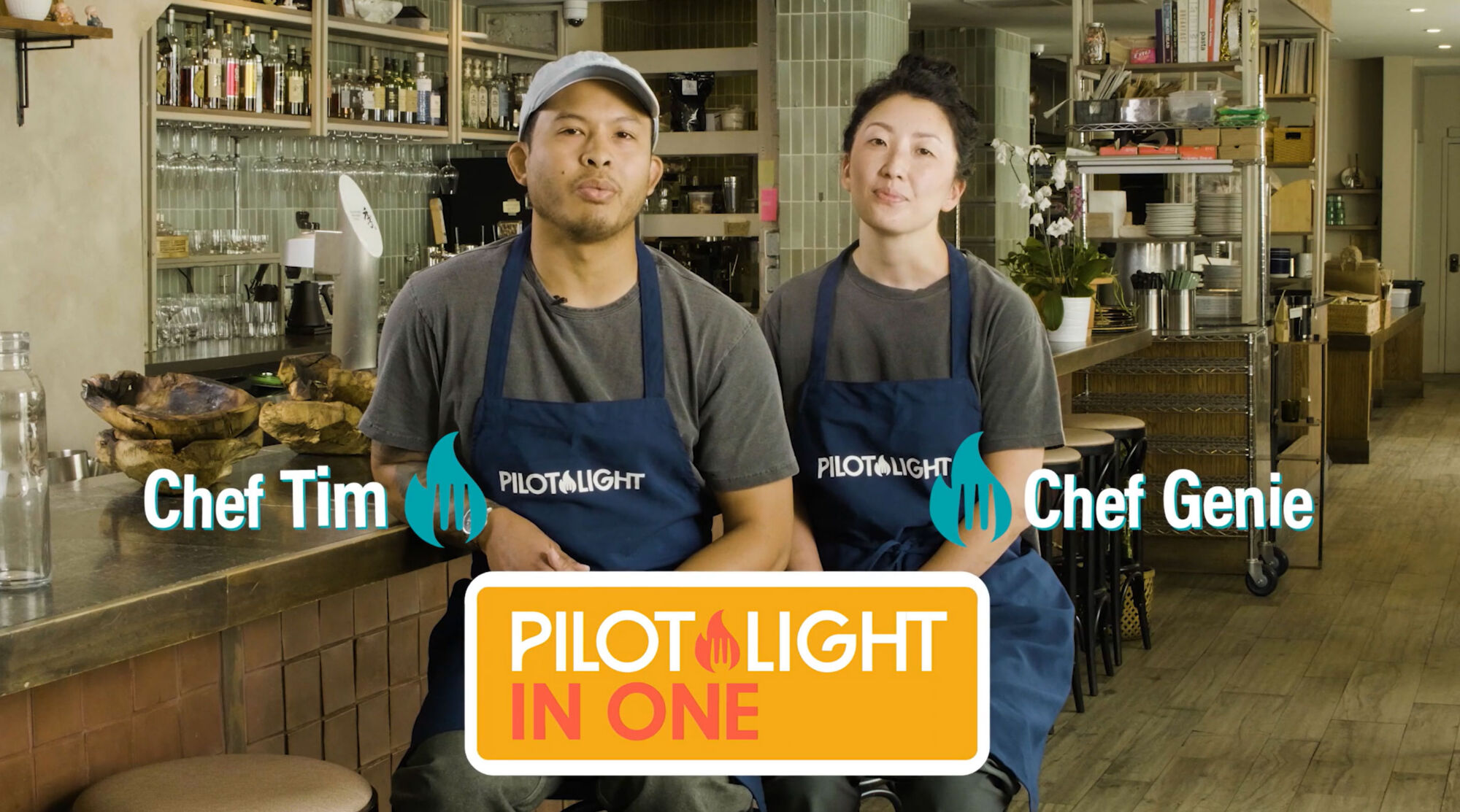
    Michelin-starred Chicago chefs Genie Kwon & Tim Flores bring a personal connection to Pilot Light’s new hands-on Food Education lesson… 

    Kasama is both a Tagalog word meaning “together” and the name of a world-famous restaurant led by Chefs Genie Kwon and Tim Flores. This esteemed Chicago eatery is known as the first Filipino restaurant to have earned a Michelin star, and is also famous for their longanisa sausage’s star-turn in the hit FX series The Bear. Now, Chefs Genie and Tim are helping Pilot Light bring the experience of Kasama into classrooms across the country through a brand-new multimedia lesson plan and video! 

    After making its world debut at the annual Pilot Light Feed Your Mind Gala, the new “Pilot Light in One Bite” video starring Chefs Genie and Tim is now available online. Plus, we are excited to announce that a new lesson connected to the video, written by Curricula Manager Regina Santiago, is now available FOR FREE on Pilot Light’s online Food Education Center. 

    Watch Now!

     Get the Lesson!

    A Lesson in Togetherness… 

    Inspired by the meaning and history of the word kasama, Pilot Light’s brand-new lesson empowers elementary aged students to flex their writing skills and consider what foods are important to their families and experiences. This 100% free resource for teachers connects to Pilot Light Food Education Standards, ELA Literacy standards, and more, offering students a robust learning experience through the lens of food.

    How it Works

    Pilot Light’s unique Food Education model helps teachers use food to teach everyday academic subjects. In this lesson, students learn how food connects them to others and their families by learning about the Filipino sausage longanisa and drawing and/or writing a story about sharing a dish with someone special to them. The video offers a special behind-the-scenes look at how Kasama’s chefs crafted their most famous dish. This expert voice from world-renowned chefs enhances the lesson by offering students a peek inside Kasama’s award-winning kitchen and hearing chefs Genie and Tim describe how their personal histories influenced their famous dish’s creation. The video also includes discussion of the various regional cuisines of the Philippines, which teachers can then expand upon in their classrooms for an added geography connection!

    “We chose this name for our restaurant because we are working together and we brought two different concepts together.” 

    Once students watch and discuss the Kasama video, their teacher helps them learn new vocabulary works like “caramelize,” “variation,” and “tradition.” Then, teachers have students reflect on their own experiences and use a free worksheet to practice writing answers to prompts related to their personal histories with food and togetherness. 

    Additionally, this lesson includes extension ideas for teachers to bring more academic connections to the lesson, including math, science, social studies, and more. Finally, Pilot Light has included a list of age-appropriate picture book recommendations for classroom read-aloud time. 

    You can now download this free lesson and start using it in your classroom today on Pilot Light’s Food Education Center! You can also forward this lesson to a teacher in your life looking to add more fun, hands-on activities to their students’ learning! 

     Take me to my FREE lesson download!

    Finally, families can now continue the lesson together with a specially designed FAMILY LETTER that accompanies this lesson and lots of others on the Food Education Center. Family Letters are fun opportunities for students to share what they’re learning in Pilot Light lessons with their caregivers, and allows them the opportunity to transfer more of their school knowledge to their everyday lives outside the classroom. 

    How You Can Bring More Classrooms Together 

    This Giving Season, you can help Pilot Light create more free resources like this lesson by making a donation to our mission! Your contribution helps keep these resources free for teachers and families, and helps keep our 150+ lesson plan library up-to-date so that teachers everywhere have access to quality resources anytime, anywhere. We want to make Food Education for All more than just a slogan this year. Help us make this vision a reality by making a donation today! Thank you so much for your generous support and belief in our shared mission. 

     I want to give Food Education for All!

  • Teachers take action for Food Education in Action Week!

    Teachers take action for Food Education in Action Week!

    Pilot Light hosts the first Food Education in Action Week, promoting awareness and investment in Food Education initiatives coast-to-coast 

    Food Education teachers are taking action in classrooms everyday. After over 13 years of working in the Food Education space, we at Pilot Light understand the dedication it takes to bring these hands-on, vitally important experiences to students of all ages and backgrounds. However, we also understand that not everyone is aware of the Food Education lessons teachers are conducting in their classrooms. 

    That’s why we decided to host the first-ever Food Education in Action Week this year. We compiled lesson plans, resource guides, and toolkits to help teachers raise awareness about Food Education in their communities. Together, our goal is to mobilize more people passionate about creating a better food systems future through education. As always, we were thrilled by our teachers’ and partners’ creativity designing Food Ed. lessons. Here are their stories: 

    Hannah Schiff of FRESHFARM FoodPrints in Washington, DC 

    “FRESHFARM FoodPrints is joining Pilot Light in our first ever “Food Education in Action Week!” The Pilot Light Food Education Standards are a key way that FoodPrints’ connects academics to food education. Wondering what this looks like in action…?

    Students at Amidon Bowen learned that plants have families and made observational drawings of plants by the families they belong to. These students drew peppers and eggplants together because they both belong to the nightshade family. 

    In this lesson, “Plants and Their Families” students practice the Next Generation Science Standard of making observations to learn about the diversity of life AND the Pilot Light Food Education Standard of learning about the origins and sources of food.”

    Amy Stamm, Pilot Light FAN Member & High School Teacher in Northampton, MA 

    “In our cooking class for the past two weeks, we focused on comfort food and learned about how eating comfort food (food that typically has a high fat content, food that ties into our cultural sense of belonging and memory, etc.) releases dopamine and helps our bodies to produce serotonin. We made mac and cheese, Italian wedding soup, and sweet potato pie. Students got to see one of the biggest sweet potatoes any of us had ever seen and compare it to a typical sweet potato. We used the huge sweet potato to make the pies. Few students had had sweet potato pie, and many were hesitant to try it at first, but once they did, many declared that they liked it way more than they thought they would. We learned about its Southern roots, which is why it’s less familiar to them than it may be to students who are growing up in the South.

    In addition to classes, I participated this week on a panel at Reuse24, a Minnesota Reuse conference, where I presented the results of a grant our school received to transition from disposable lunch clamshells, silverware, cups, plates, bowls, and food storage containers to all reusable products, saving thousands and thousands of items from the landfill every year and helping us to reduce our food-related waste significantly.

    In addition, I was asked to be a member of the food justice organization (and our food partner) Grow Food Northampton‘s Education Advisory Board, where we help GFN’s education manager strategize about how best to fulfill their mission of connecting our community to the land as a source of food, building food sovereignty, and creating a just food system. We had our first meeting on October 10th, and it was inspiring to connect with other food educators in our community and to really think through how to increase food access and education, and to build food justice together.”

    Jennifer Bailey, current Pilot Light Fellow & 2nd Grade Teacher in Cambridge, NY 

    Students participate in Food Education in Action week by harvesting potatoes to donate to their community's local food bank.

    “We collaborated with Comfort Food Community and Alleged Farm in nearby towns. We gleaned 378 pounds of potatoes in under an hour. This work will benefit area food pantries. We need to sample fresh spuds ourselves, too…so we brought back some to cook in our crockpot at school! Our students LOVED this experience and are excited to eat fresh potatoes.” 

    Jennifer’s students said while gleaning potatoes: 

    “This is better than recess!”

    “I want to be a farmer some day.”

    “I love that we could help so many people.”


    After hearing these inspiring Food Education stories from educators across the country, we knew we wanted to share them with a bigger audience. “Food Education has made such an impact on thousands of classrooms and communities nationwide,” said Taylor Meredith, Pilot Light Education Policy Advisor. “We created Food Education in Action Week as a way to shine a spotlight on the educators who are engaging their students in this important work; helping them understand their role within the food system and exploring how we can make our local foodways inclusive and equitable for all. Hopefully, sharing these stories will inspire others to bring Food Education to their classrooms, too!” 

    It’s not too late to join in on the action! Share your story today or anytime by tagging us @pilotlightchefs on Instagram, Facebook, or LinkedIn. 

  • Antoni Porowski joins Pilot Light’s 2024 Feed Your Mind Gala in Chicago!

    Antoni Porowski joins Pilot Light’s 2024 Feed Your Mind Gala in Chicago!

    Pilot Light announces Queer Eye star & author Antoni Porowski as the 2024 Gala Emcee & Host! 

    Photo by Paul Brissman

    The chefs behind Pilot Light are thrilled to announce Antoni Porowski as the celebrity host of the 2024 Feed Your Mind Gala. Porowski is a New York Times Bestselling author, an Emmy-winning producer and resident food and wine expert on Netflix’s globally-renowned series Queer Eye, and star and executive producer of National Geographic’s highly-anticipated docuseries No Taste Like Home. Set for Friday, November 1, 2024 at 6p at Venue West in Chicago, the event promises to be an extraordinary evening that combines world-class dining with a powerful mission.

    We are absolutely honored to have Antoni’s passionate support for food education and the next generation of culinary leaders at our annual fundraiser gala this year. 

     FEED YOUR MIND TICKETS

    Feed Your Mind Gala Details

     Under the leadership of co-chairs Leah Gordon and Felipe Ospina, the 2024 Feed Your Mind Gala is a must-see event for any culinary enthusiast in the Chicago region! For one night only, guest chefs from the city’s top restaurants come together to create a one-of-a-kind meal in support of Pilot Light’s Food Education mission. Guests will indulge in a lavish five-course dinner and enjoy inspiring opportunities to give back to their community, including a thrilling live auction featuring exclusive trips and experiences only available at the Feed Your Mind Gala. 

    Furthermore, Pilot Light is thrilled to welcome cookbook author and journalist, Anupy Singla of Indian as Apple Pie, as sponsor and special guest at the 2024 Feed Your Mind Gala. Her celebrated cookbook, Indian for Everyone, is newly available in paperback and makes the perfect gift for the holidays! 

    2024 Feed Your Mind Guest Chefs 

    This year’s gala will highlight a new generation of culinary innovators who are shaping the future of Chicago’s food scene:

    Together, this all-star team of guest chefs will create a menu under the curation of Pilot Light’s Founding Chefs: Matthias Merges, Jason Hammel, Paul Kahan, and Justin Large. 

    “After a decade-plus, we’re excited to take a little bit of a step back this year and let our Guest Chefs lead the meal. The Founding Chef team is helping curate the evening and working on some stellar trips for our live auction. That being said, we’ll still be in the kitchen – we always have a great time coming together and plating each other’s dishes, expediting…the Feed Your Mind Gala kitchen is a really communal, supportive experience. We’re still learning from each other and cheering each other on. It’s like a Pilot Light classroom, in that way.”

    -Pilot Light Founding Chef Paul Kahan 

    Ready to FEED YOUR MIND? 

    Time is running out to attend this unforgettable evening of philanthropy and fantastic food! Join Matty, Pilot Light, and the Guest Chefs in showing your support for food education at the 2024 Feed Your Mind Gala on Friday, November 1st at Venue West. You don’t want to miss it! 

     FEED YOUR MIND TICKETS

    Thank you to our generous Feed Your Mind Gala sponsors! 

    More about the Feed Your Mind Gala

    MEDIA CONTACT 

    Ryan Beshel

    SIX4 Creative

    ryan@six4creative.com


  • Pilot Light recognized as a Top 100 Finalist at the Chicago Innovation Awards!

    Pilot Light recognized as a Top 100 Finalist at the Chicago Innovation Awards!

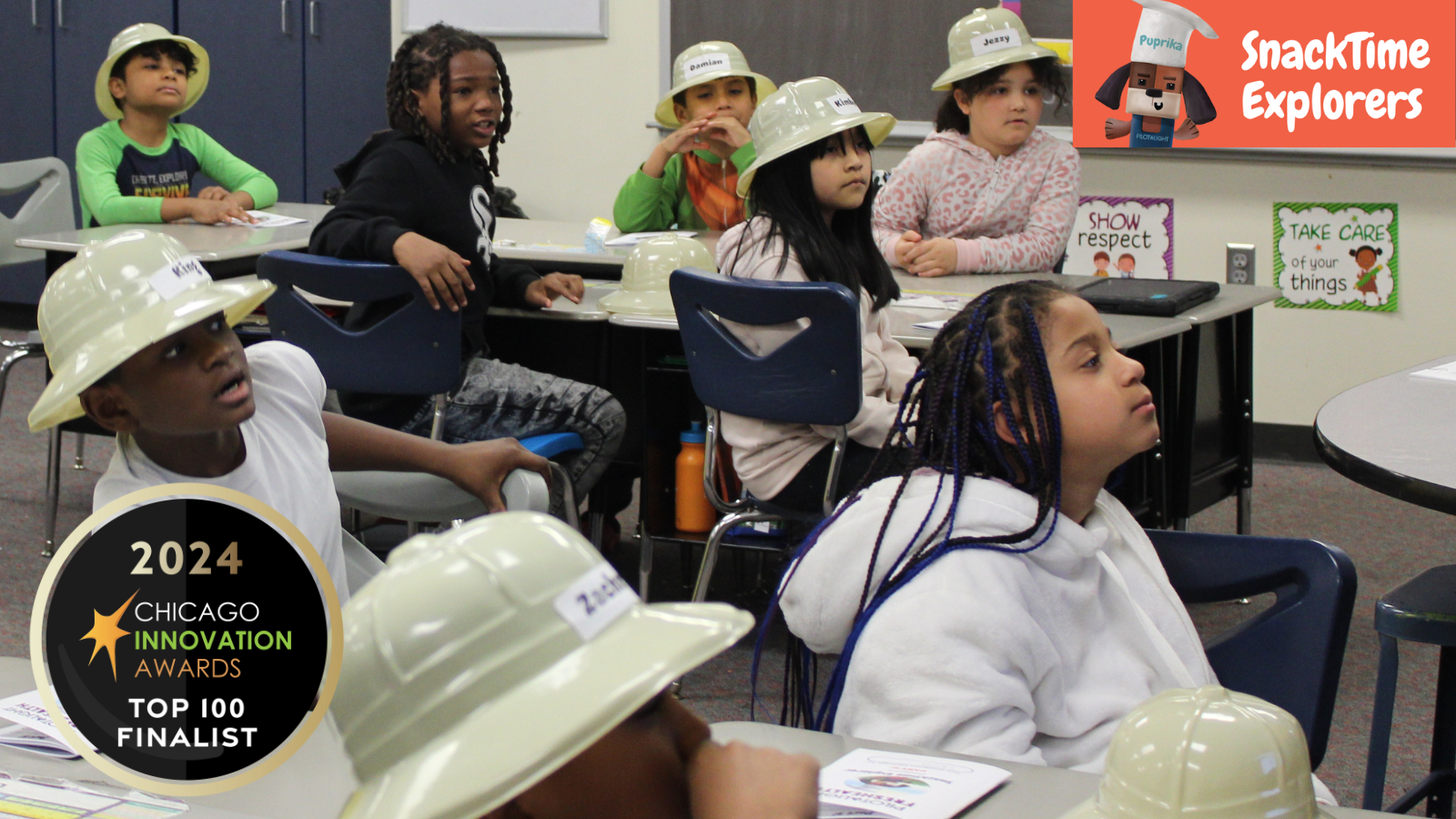
    SnackTime Explorers recognized for its innovative nonprofit, private, and government collaborative model! 

    Pilot Light and FRESHEALTH at DNO Produce are honored to announce that our SnackTime Explorers program has been selected as one of the Top 100 Chicago Innovation Award Finalists! We have been chosen out of 350 nominees for this honor, and are nominated alongside some of the most innovative new products and services across Chicago region businesses and nonprofits. This November 14th, over 700 business and civic leaders will attend the 23rd Chicago Innovation Awards ceremony honoring the winners of this year’s awards. 

    We are absolutely thrilled to be recognized for the innovation and creativity behind SnackTime Explorers. This groundbreaking educational toolkit has been designed in partnership with the amazing team at FRESHEALTH to supplement the USDA’s Fresh Fruit and Vegetable Program (FFVP). The FFVP provides fresh produce snacks to millions of students in public schools across the country, creating opportunities for young learners to sample a variety of fruits and vegetables together outside of cafeteria meal times. However, we and our partners at FRESHEALTH recognized the unique opportunity to add an educational element to this federally funded program through SnackTime Explorers. This educational toolkit partners with teachers serving FFVP snacks in their classrooms to transform regular classroom snack time into an exciting exploration of fresh produce, inspiring curiosity and connection between students. Learn more about our latest SnackTime Explorers teaching cohort here!

    It is a true honor to be recognized for SnackTime Explorers’ innovative model by the Chicago Innovation Awards! In addition to being named a top 100 finalist, we are also eligible to win the publicly-voted People’s Choice Award at this year’s ceremony. You can help us by voting for Pilot Light (page 6) at: https://chicagoinnovation.com/nominations/! 

    “Chicago continues to rise as a global hub of innovation that cuts across industries, large corporations and startups, for-profits and non-profits,” said Luke Tanen, President and CEO of Chicago  Innovation. “The impact that this year’s nominees generated is profound – their new products and services generated $4.2 billion in revenues and created over 5,900 new jobs.”

    As one of the Top 100 Finalists, Pilot Light will receive a $2,500 scholarship to attend The Practical Innovator, a day-long executive education course on October 1st led by top faculty who teach innovation at Northwestern’s Kellogg School of Management. Out of the Top 100 Finalists, the judges will select 20 winners of the Chicago Innovation Awards. In addition to being celebrated at the Chicago Innovation Awards on November 14th , the winners will be invited to ring the Nasdaq Bell in New York City and receive widespread media recognition.

    Thank you to the team at Chicago Innovation Awards for this distinct honor and don’t forget to cast your vote for Pilot Light today! 

  • 2024-25 Food Education Fellowship Launched at Pilot Light

    2024-25 Food Education Fellowship Launched at Pilot Light

    The 2024-25 Food Education Fellowship has officially begun! We at Pilot Light are excited to announce that 26 educators have joined our 6th annual Fellowship. This year-long professional development and peer learning opportunity is our cornerstone program, and we cannot wait to see how this year’s cohort of Fellows develops Food Education leadership in their school communities during the 2024-25 school year. 

    About the Fellows 

    Since 2020, we have taken advantage of virtual learning environments to expand the Food Education Fellowship to reach educators across the country. We are thrilled to welcome our largest ever Fellowship cohort, with educators from 11 different states:  

    • 10 educators in Chicago and Illinois 
    • 3 in the Midwest outside of Illinois (2 in Indiana, 1 Michigan) 
    • 6 in New York (3 in NYC, 3 in Upstate and Central New York as part of our partnership with SOFSA through the USDA’s Farm to School Grant)
    • 4 across the East Coast outside of NY – 1 Delaware, 1 Massachusetts, 1 Pennsylvania, 1 Virginia 
    • 3 across the West and South – 1 Arizona, 1 Georgia, 1 Oklahoma 

    In addition to geographic diversity of this year’s Fellows, we are excited to see a variety of grade levels and subject areas present in this year’s classrooms: 


    You can learn more about each Fellow by browsing their bios here! 

    2024-25 Fellowship Kicks Off at Summer Institute 

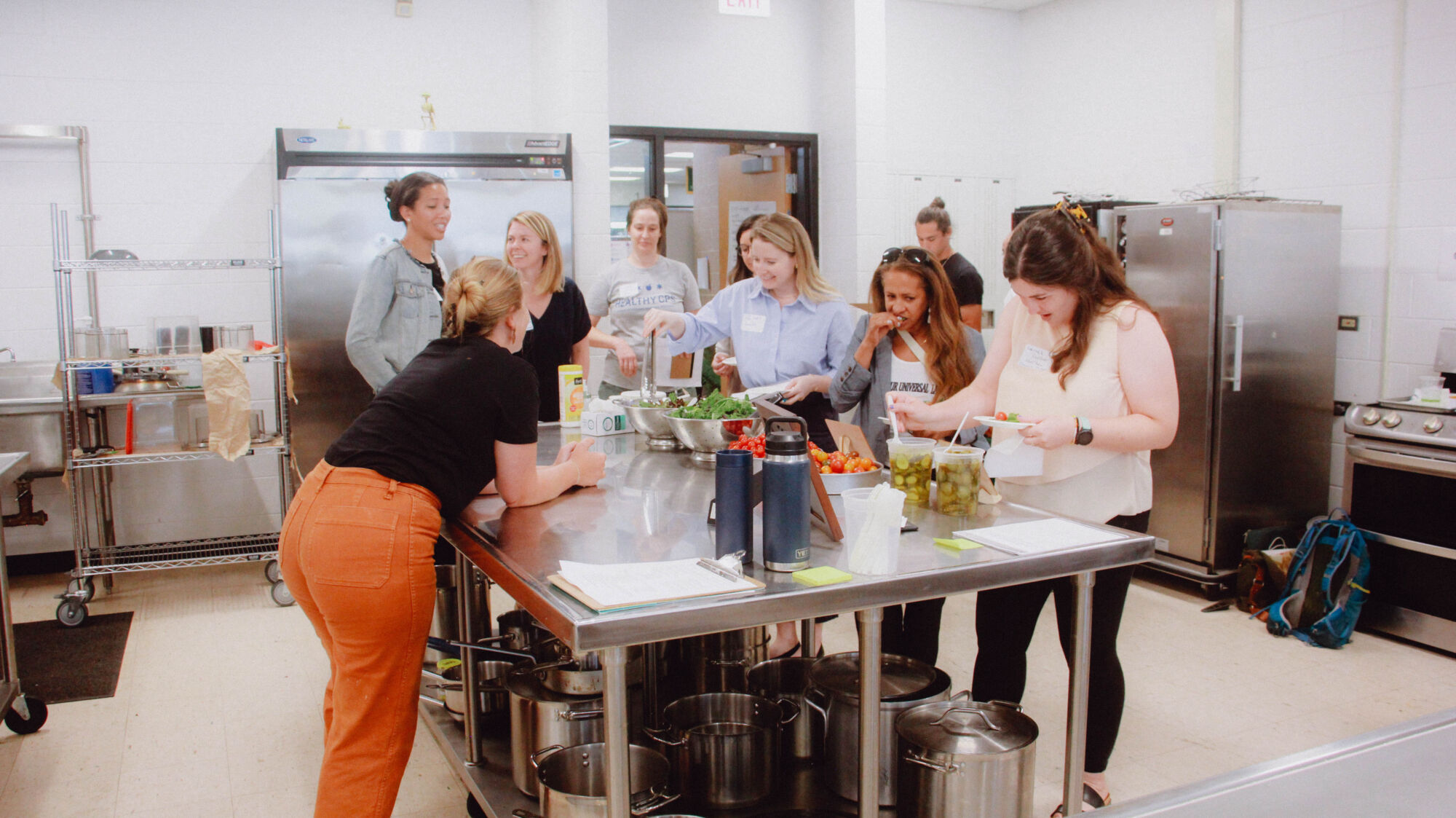
    Every year, Fellows begin their time with Pilot Light at Summer Institute, a 2-day online onboarding and kickoff event. This year, in addition to learning about the Food Education Standards and other Pilot Light best practices, Fellows heard from multiple speakers to inform their planning and approach to Food Education. 

    First, Fellows heard from owner of The Evolved Network Chef Sebastian White about how Food Education comes alive in the classroom. This discussion was informed by Sebastian’s extensive expertise in how food can be used to fuel the psychological development of students and how educators can leverage Food Education to build relationships and empower students of all ages. 

    2024-25 Food Education Fellows also had the chance to hear from a member of the Fellowship Alumni Network (FAN) Joanna Balla-Elliott, a 5th and 6th grade Humanities teacher at Chicago Jesuit Academy. The opportunity to learn from a peer who has recently completed the Fellowship offered invaluable insight for this year’s Fellows. 

    September Meeting – Food Connects Us 

    This week, Fellows met for the first time since last month’s Summer Institute to dig into the first Food Education Standard – Food Connects Us To Each Other. 

    The guest speaker for this session was Kandace Stallings, a consultant at Invested Consulting Firm based in Chicago with experience in Chicago Public Schools as a counselor/specialist in self-awareness and interpersonal relationship education. Kandace led a thoughtful discussion on how food can be used in the classroom as a cultural bridge. 

    Fellows shared about foods that were important to their family, identity, or culture. Kandace then discussed the importance of fostering students’ self-awareness, interpersonal relationships, and decision-making skills and how food can be used to creatively teach these competencies. Fellows appreciated the opportunity to discuss the different cultural, generational, and geographic influences on food behaviors and choices that influence both themselves and their students. Finally, Fellows shared their own experience with how food can help build trust in their relationships with their students, which helps lay the foundation of a productive classroom. 

    Finally, Alex DeSorbo-Quinn, Pilot Light’s Executive Director joined the first official PD session to discuss Pilot Light’s history and offer her support to the new cohort on behalf of the entire organization. “You are what is fueling our team’s flickering flame,” Alex shared with the 2024-25 Fellowship cohort – we couldn’t have said it better ourselves! 

    Interested in learning more about the Food Education Fellowship and Pilot Light’s other programs and events? Sign up for our e-newsletter to get the latest news right to your inbox!

  • SnackTime Explorers welcomes 14 adventurous Lead Teachers in 2024-25!

    SnackTime Explorers welcomes 14 adventurous Lead Teachers in 2024-25!

    FFVP Explorations Start this Month! 

    As students across the country sharpen their pencils and shine their shoes in preparation for the new school year, their teachers are hard at work readying their classroom for another year of learning. At Pilot Light, we are fortunate enough to work closely with teachers who are looking to bring new, exciting learning experiences to their students through food. One way Pilot Light teachers are switching up their curriculum this school year is through SnackTime Explorers! We are excited to welcome 15 new Lead Teachers in Michigan, Indiana, and Tennessee to this hands-on Food Education program in 2024-25. 

    About SnackTime Explorers Lead Teachers

    SnackTime Explorers is a groundbreaking hands-on educational toolkit designed in partnership between Pilot Light and FRESHEALTH. This toolkit and training program for teachers has been designed to supplement the USDA’s Fresh Fruit and Vegetable Program (FFVP), which provides elementary schools with funding for fresh produce served in classrooms during the school day. 

    SnackTime Explorers transforms FFVP classroom tastings into multisensory learning experiences, transporting elementary students to the exciting world of fresh fruits and vegetables with the help of Puprika, Pilot Light’s puppy chef mascot. 

    This year, we are excited to welcome 14 new Lead Teachers to SnackTime Explorers. Over the course of the first 2024-25 school term, this group of educators will: 

    • Use SnackTime Explorers lessons and materials in their elementary school classrooms 
    • Attend three hours of professional development trainings aligned to Pilot Light’s Food Education Standards
    • Support 2-3 additional teachers at their school in implementing SnackTime Explorers. 

    We are so excited to work with this new group of teacher leaders in the coming weeks! 

    Meet the Cohort 

    We are thrilled to bring this program to 11 new Midwest schools this year, as we continue to work on our SnackTime Explorers Expansion Plan. 

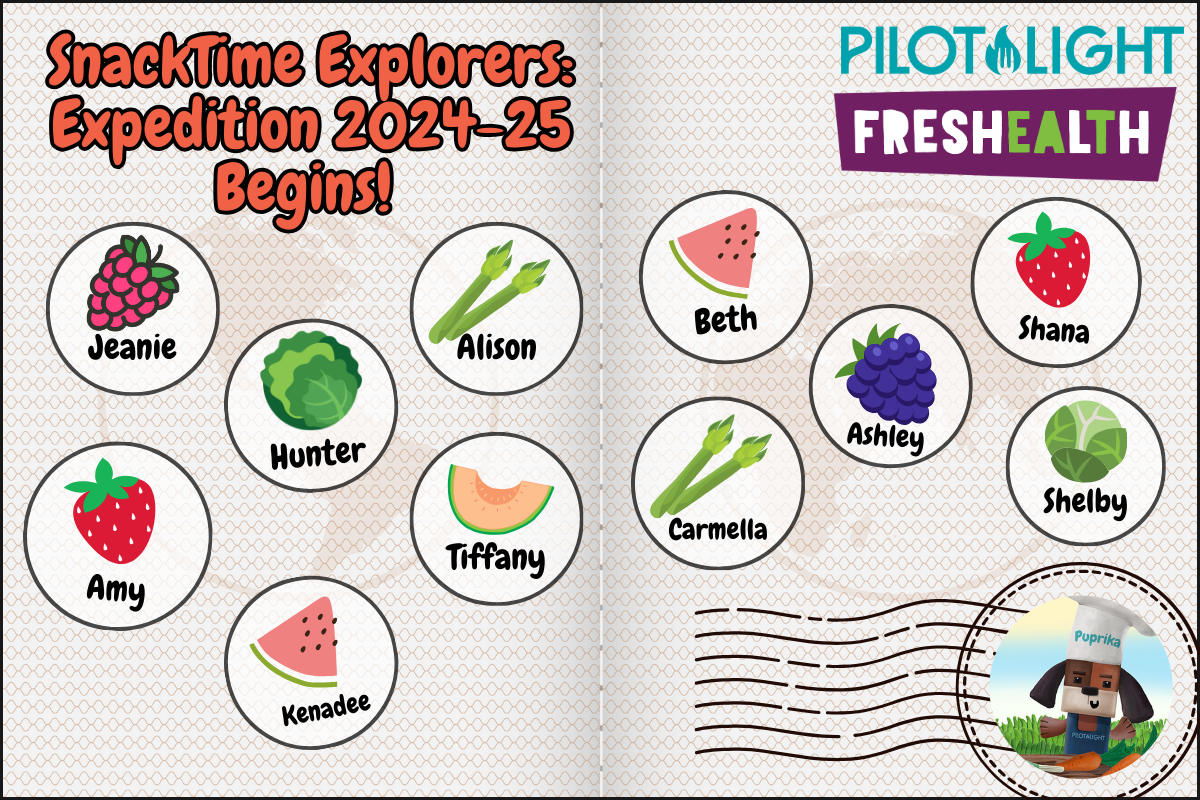
    This year’s Lead Teachers are: 

    I’m most looking forward to… 

    “Exploring food experiences and choices with [my] students!” 

    “Extending my knowledge on different foods and students passing it forward to those around them.” 

    “Seeing the kids’ reactions and input on things – [I] really want to hear their stories and experiences and see their excitement.” 

    Are you interested in bringing SnackTime Explorers to your classroom? Fill out our interest form here!

  • Agriculture Education lessons are now available!

    Agriculture Education lessons are now available!

    Agriculture Education Lessons Disseminated to Educators in Daylong Pilot Light Symposium

    All photos by Shabari Bailey for Pilot Light. 

    Pilot Light’s new Agriculture Education lessons are now available on our online lesson plan library following the culmination of a two-year research grant from the USDA’s National Institute for Food and Agriculture’s Food and Service Learning Program. This July, Pilot Light brought together over 45 teachers and community partners for a daylong event Cultivating Food Systems Leadership, which shared the results of this research and marked the debut of the new Agriculture Education (AgEd) and Advocacy lessons!

    The Importance of AgEd & Advocacy

    The day began with a panel discussion on the importance of agriculture & advocacy education featuring Nick Davis of Community Food Navigator, Marissa Dake of DNO Produce, and Pilot Light Founding Chef Matthias Merges of Folkart Management. Panelists each shared their own background in the realm of food & agriculture education, and underscored the importance of advocacy in everyday lives and careers. 

    Following the panel, attendees had the chance to experience three of the seven AgEd & Advocacy lessons for themselves in a series of hands-on demonstrations led by Pilot Light staff and our community partners. 

    “At Pilot Light, we know that true change happens through community,” said Eileen Torpy, Director of School & District partnerships and AgEd & Advocacy program designer. “The structure of our dissemination event was designed to mimic the experiences we hope teachers and students have in our programs – it laid foundational knowledge from multiple perspectives with our keynote panel, gave opportunities for practice and investigation through hands-on activities and breakout rooms, shared best practices through our grant recap presentation, and most importantly prioritized the connections attendees made with each other.” 

    Agriculture Education Lessons in Action: How do we grow our food? 

    Breakout room one, designed around the agriculture education lesson “Organic vs. Conventional: How Do We Grow Our Food?” was co-led by Food Education Fellowship Director Caitlin Arens and Contemporary Farmer Inc. Founder Daviiid Toledo. In this lesson, students practice planting cucumber seeds while they learn about the differences between dirt and soil. Then, they have the opportunity to taste test different types of produce to see if they can identify which have been grown conventionally and which have been grown organically. Finally, students review what they learned and compare and contrast the similarities and differences between the two growing methods. 

    Agricultural careers

    The second breakout room featured a demonstration of Agriculture Education Lesson #5 – “Agricultural Careers.” This discussion was led by Fellowship Alumni Network Manager Tamieka Hardy and British Griffis, founder of Harvest OG. In this lesson, students practice math skills while learning about the realities of life as a farmer through a simulation game entitled “Bushels or Bust.” This game encourages students to consider the conditions and requirements of farming beyond planting and harvesting by making mock budgets and experiencing both the risks and rewards of becoming a farmer. Furthermore, students discuss the multifaceted nature of agriculture as a career field. They are encouraged to expand their perception of the agricultural field to include new biotechnologies, communications, agribusiness, and more. 

    Advocating for our hungry planet 

    Finally, in breakout room #3, Eileen Torpy explored the culminating lesson “Advocating for Our Hungry Planet,” which ends the AgEd & Advocacy unit with student-led advocacy projects. These advocacy projects get students thinking about sustainable agriculture practices. Together, students work in small groups to identify an agricultural advocacy issue relevant to their own communities. Upon completion, students present their research projects to each other and their wider school community through a project showcase. In addition, Pilot Light Evaluation Associate Rachel Brustein led a discussion about the organization’s evaluation mission and best practices. 

    What We’ve Learned 

    Following these breakout rooms, event attendees enjoyed a delicious lunch provided by Chef Jessica Walks First of Ketapanen Kitchen. The lunch consisted of foods indigenous to the Chicagoland region, including bison tacos, homemade corn tortillas, and a fresh garden salad. While everyone enjoyed their lunch, Eileen Torpy ended the day with a presentation on the AgEd & Advocacy research grant, which funded the creation and implementation of this new program over the last two years. 


    “The AgEd & Advocacy Program funded by a FASLP grant from NIFA was an exciting success for Pilot Light. Built on our Food Education Standards and Agriculture Education lessons, we’re delighted to report that our aims of supporting teachers and engaging students in conversations about being agents of change in the food system have been met through this grant,” Torpy explained during the presentation. “One critical element that allowed this project to thrive was having multi-year funding. Because we were able to support and sustain the program through multiple rounds of implementation, it allowed us to collect feedback from teachers and iterate from Year 1 to Year 2. Another exciting outcome of the program was seeing student voice in action through the Food Advocacy Projects. By valuing our teachers’ curiosity, knowledge, and expertise in implementation, we saw that spark transfer to students and extend beyond the classroom. Students explored different issues in the food system then came up with unique and local action plans for ways they could impact their communities through this inquiry-driven project.”

    Use AgEd lessons in your classroom! 

    Pilot Light wishes to thank everyone who attended and supported this event – it was energizing to meet with so many of our teachers and partners in one place and to share our research findings and the new AgEd & Advocacy lessons. We are so excited to share these lessons on our online Food Education Center – now, teachers everywhere looking to bring Agriculture Education to their students can easily do so through this free resource. Together, we believe we can cultivate food systems leadership for years to come. 

    Read more about this event on Local Food Forum. 

    AgEd & Advocacy was initially funded through a research grant from the USDA’s National Institute of Food and Agriculture Food and Service Learning Program. Thank you to everyone at the NIFA FASLP for your generous support!

  • Food advocacy student projects create lasting change in upstate and central New York

    Food advocacy student projects create lasting change in upstate and central New York

    Food advocacy is a skill that takes practice, patience, and dedication.

    At Pilot Light, we believe that truly comprehensive Food Education cannot exist without including an exploration of food advocacy for students of all ages. That’s why every year our Food Education Fellows end their time in the program with a student-led food advocacy project. These projects offer students the opportunity to engage with a food issue relevant to their community at a developmentally appropriate level. 

    Today, we’re focusing on food advocacy projects from two Fellows from the 2023-24 school year: Regina Hanson and Monica Chamberlain, who both teach in the upstate and central New York area.*

    *The work of these two teachers is sponsored in part by Pilot Light’s USDA Farm to School award, which is supporting 15 teachers in New York, Chicago, and additional areas across the country over the course of two years.

    Building inter-school food connections in Schenectady 

    Middle school students practice cooking together in central New York.

    Ms. Hanson is a middle and high school Family Consumer Sciences teacher at Schalmont Central School District in Schenectady, NY. During her time as a Food Education Fellow, Ms. Hanson worked with her 7th, 11th, and 12th grade students to build real-world food and cooking skills, with a heavy emphasis on how environmental, cultural, and social factors influence our food choices. 

    For their food advocacy project, Ms. Hanson and her students dedicated their time and energy in an investment that will benefit their school community for years to come. Students worked with Ms. Hanson to secure a grant from their local credit union that funded the purchase of two new hydroponic grow towers for their school. These grow towers serve multiple uses: 

      1. Fresh ingredients: Schalmont Central high school students can gain real-world work experience by running a campus cafe where staff can purchase delicious food made by their students. Now, produce from the new grow towers is used in their cafe dishes, bringing them one step closer to being a “farm to table” location! 
      2. Improving food access: Produce not used in the school cafe is now available for middle school students to bring back to their families. Any middle school student is now allowed to pick fresh herbs, fruits, and vegetables to bring back home, thanks to the grow towers secured during Ms. Hanson’s food advocacy project! 
    A group of students and teachers bake together as part of a food advocacy project.
    Students bake together in classroom as part of a food advocacy project.

    This single food advocacy project, completed in just a few short months, will benefit the entire school community for years to come. Ms. Hanson and her students are proof that just one classroom’s dedication and excitement can blossom into long-lasting, community-wide change. 

    Student-led farm to school action in Hamilton, NY 

    Milk from local dairy farm Collins Creamery was present in school thanks to the advocacy work of students.

    Monica Chamberlain is a central New York 6th grade teacher at Hamilton Central School. The surrounding community is largely farmland, and connecting her students to this aspect of their environment became a prominent theme during Monica’s Food Education lessons. 

    For their food advocacy project, Monica’s classroom teamed up with local dairy farm Collins Creamery to run a “dairy drive” at their school. 6th graders joined forces to raise money for their cafeteria to source local milk from Collins, raising over $1,000 in just the first month of the drive. This was more than a fundraiser – this was a student-driven effort to make a schoolwide investment in local food. 

    Their efforts raised enough funds to purchase almost an entire school year’s worth of mealtime milk, showcasing the power of student leadership to make a meaningful difference not just in their cafeteria, but also in the surrounding community. In addition, Monica’s students raised enough funds to purchase seven weeks’ worth of Collins milk products for their local senior living facility, spreading the joy of local food to a population that experiences a high level of food insecurity in their community. Students also made over 300 shelf-stable meal kits and donated them to seniors in their area.

    This partnership with Collins Creamery also gave students the opportunity to visit this “cow to carton” dairy farm in person, where they learned how to make butter, saw cheese curd production up close, and witnessed the milk processing procedure for themselves. 

    Both Ms. Hanson and Monica Chamberlain’s food advocacy projects demonstrate the importance of connecting young learners to their wider food system. Students have the power to make change not just for themselves, but for their peers, families, and fellow community members. Food advocacy projects allow students to take their food knowledge and put it into action, making the food system better for us all.


  • Pilot Light and SOFSA: Planting the Seeds of Partnership

    Pilot Light and SOFSA: Planting the Seeds of Partnership

    Pilot Light and SOFSA (the Syracuse Onondaga Food Systems Alliance) have big plans for the future of Food and Agriculture Education in Syracuse, NY. When small organizations join forces, they have the potential to grow from a single seed of an idea into an orchard of impact. Here’s how we plan to sprout big changes in the Syracuse-Onondaga food system…

    The Seeds: 

    A community meeting hosted by SOFSA.
    Photo provided by SOFSA

    In 2023, Pilot Light was awarded a USDA Farm to School Grant in order to expand our Food Education mission. As a growing organization, it is important to us to ground ourselves in the work already being done in the communities we serve. Therefore, as we began planning to expand to more agricultural districts, we looked for partners to help us further our Food Education work. We were struck by the community-minded food justice work spearheaded by The Syracuse Onondaga Food Systems Alliance (SOFSA): 

    SOFSA is a network of community members, organizations, businesses, and policymakers working together to build a better food system for everyone in Syracuse, Onondaga County, and Onondaga Nation. SOFSA brings communities together to foster relationships, develop projects, align resources, and advocate for policies to improve the health of their neighbors and environment. (Are you located in the Syracuse-Onondaga Nation area? SOFSA is open to anyone who eats, grows or loves food in the Syracuse-Onondaga region, and folks can tap in by joining an upcoming event on their Community Calendar or reaching out directly to their staff.) 

    After meeting with the SOFSA team, Pilot Light incorporated a partnership plan into our USDA Farm to School grant application and received the two-year award in summer 2023. 

    The Sprouts: 

    Pilot Light staffers visit Food Education Fellow Monica Chamberlain in her central NY classroom.
    Left to right: Taylor Meredith, Monica Chamberlain, Caitlin Arens

    Once we were awarded Farm to School funding for this partnership, we knew it was crucially important to visit Onondaga County for ourselves. Luckily, we already had connections to the Central New York area. Two of our current Food Education Fellows are located nearby in Hamilton, NY (Monica Chamberlain, Hamilton Central School) and Schenectady, NY (Regina Hanson, Schalmont Central School District). 

    In March of 2024, Pilot Light team members Caitlin Arens and Taylor Meredith traveled to Syracuse. Our three goals for this trip were: 

    1. gain a deeper understanding of the area,
    2. visit our current Fellows, and 
    3. and begin identifying more local educators interested in bringing Food Education to their classrooms.

    After spending a snowy, jam-packed school day with Food Ed. Fellow Monica Chamberlain, we visited local grocery stores, libraries, and schools with fliers promoting our Food Education Fellowship. “Both Taylor and I went to school in Syracuse, so being back there felt like a homecoming,” Caitlin Arens, Food Education Fellowship Director, explains. “This is where I first learned about the relationship between different parts of the food system, including the intricacies of the school food system.” 

    “Our goal for this visit was to tap into the diverse web of folx in the Syracuse area by sharing fliers about The Food Education Fellowship opportunity in places where the community gathers around food: from larger, local grocers like Wegmans, to smaller co-op and family markets, to community centers conducting food drives, libraries where you read about food, and even meeting directly with school food professionals and teachers in their district’s professional learning centers. When you move through these different branches of the food system for yourself, you realize that learning about how it all works is truly central to our own personal and collective development. This is why partnering with organizations like SOFSA, who are already doing great work on the local level to convene the community around improving the food system, is essential.” –Caitlin Arens, Pilot Light Food Education Fellowship Director 

    The Fruits:

    Finally, we ended our trip with a Food Education demonstration at Salt City Market, co-produced by Jess Miller of The Kitchen Literacy Project.

    The event featured local Syracuse chefs Manila Southammavong of Fat Brother, Joey Chisari of Mojo’s Miscellaneous, and Brody Mapes of Willow Rock Brewing Company in a “Chopped” style competition. The three chefs, all of which come from different culinary and cultural backgrounds, demonstrated the Pilot Light Food Education Standard FES 1: Food connects us to each other. By using the same ingredients to showcase three different culinary interpretations, the chefs showed the audience how food can be used in the classroom to connect students to one another and spark conversation about how personal food experiences relate to the food system as a whole. 

    The event was predominately attended by educators in the area, including several from Lafayette School District located near the Onondaga reservation. It was a great opportunity to meet people interested in Food and Agriculture Education and speak with them about The Food Education Fellowship and additional programs. 

    The Orchard: 

    SOFSA community event where children helped plant a garden.
    Photo provided by SOFSA

    Both Pilot Light and SOFSA view community partnerships as a powerful agent of change for our food systems. Together, our long-term goal for this partnership is to raise awareness about the potential of Food Education as a tool for creating lasting change to local food systems, especially those that have been harmed by environmental injustice, redlining, and disinvestment. However, these orchard-sized goals can only be achieved through patience and thoughtful relationship building. This is why we are starting small and laying the groundwork through: 

    • site visits to the Syracuse-Onondaga area, 
    • recruiting passionate educators eager to get involved in our programs, and 
    • resource-sharing with SOFSA and other local partners already doing this work in their community. 

    Change is possible – the growth of a seed to an orchard proves just that. You can follow our shared blossoming on social media: @pilotlightchefs @syrfoodalliance or reach out to us by emailing info@pilotlightchefs.org and info@syrfoodalliance.org.